

Congenital heart disease
Congenital, Heart
Research aim
To improve long term cardiovascular and neurodevelopmental outcome in patients with severe congenital heart disease.
About us
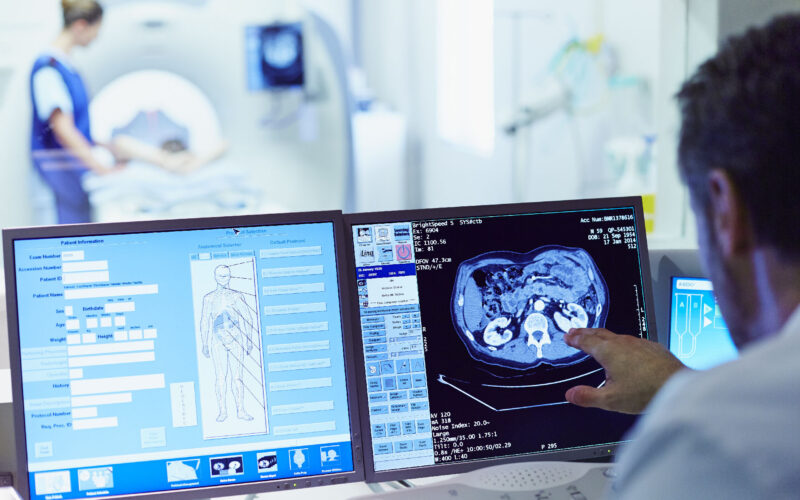
During the past decades, the care for patients with congenital heart disease (CHD) has improved dramatically. Where only a minority of patients survived fifty years ago, currently more than 90% of patients live into adulthood. Therefor both research and clinical care need to shift from improving mortality to decreasing morbidity. To accomplish this we developed the Congenital Heart Disease life span project: a unique life cycle approach with an extensive research program fully integrated in clinical follow-up from as early of 20 weeks gestation up to the age of 40 and onwards. Cardiac- as well as neurocognitive follow-up is protocolized for all major congenital heart defects and includes sequential MRI scanning of the fetal as well as pre- and postoperative heart and brain. Follow-up is fully aligned with the other patient focus groups of the Child Health and Circulatory Health programs of the UMC Utrecht.
There is excellent interdisciplinary, national and international collaboration. We lead several large national trials that aim to improve diagnostics and neurodevelopmental outcome in patients with severe congenital heart disease. We our co-founders of the EU-ABC consortium (London, Zurich, Munich, Utrecht, Giessen) that has a world leading role in brain development in congenital heart disease.
Furthermore we closely collaborate with the princess Maxima Center to investigate cardiac toxicity in pediatric oncology.
Do look for a research project in one of the focus areas of pediatric cardiology?
Read more about the opportunities on this page.
Lifespan research and long-term outcomes in patients with congenital heart disease
Within the Lifespan research program at the Wilhelmina Children’s Hospital, children are followed at fixed moments in their lives, from the 20-week ultrasound until well into adulthood, by various specialists at WKZ and UMC Utrecht. By collecting data from all these patients, researchers are gaining an increasingly clear understanding of the impact of congenital heart defects on our patients’ lives. In addition, our research also focuses on the short- and long-term outcomes of surgical corrections for congenital heart defects.
Are you interested in a research internship in the field of Lifespan research and long-term outcomes? Please contact us. Examples of current internship research opportunities:
1. Neurocognitive and Motor Outcomes
- Studying developmental outcomes and potential predictors in patients with congenital heart disease (CHD Lifespan study).
- Congenital heart defects and brain damage (CRUCIAL trial)
Contact:
Dr. J.M.P.J. Breur (pediatric cardiologist) h.breur@umcutrecht.nl
Dr. M.C.A. Sprong (pediatric physical therapist), M.Sprong-3@umcutrecht.nl
Dr. M.M.J. van Schooneveld (clinical neuropsychologist), M.vanSchooneveld-2@umcutrecht.nl
2. Student research project: neonatal mammillary body injury and cognition in children with critical congenital heart disease
At the Wilhelmina Children’s Hospital, we study early brain development and long-term developmental outcomes in children with critical congenital heart disease. In one of our previous studies (Perioperative Mammillary Body Injury on MRI in Neonates with Severe Congenital Heart Disease – PubMed), we frequently observed injury to the cerebral mammillary bodies: small brain structures that play an important role in memory. This injury was most often seen after neonatal cardiac surgery. At two years of age, we found no differences in cognitive outcomes between children with and without this injury. However, the consequences of early mammillary body injury may become clear later in childhood, as memory and cognitive skills develop.
In this follow-up project, we aim to investigate whether mammillary body injury on neonatal MRI is associated with cognitive functioning and memory at five years of age. We are looking for a student to help analyze and interpret the research data, under the supervision of a principal investigator (Hans Breur) and a postdoctoral researcher (Maaike Nijman).
We are looking for a master’s student in medicine, biomedical sciences or a related health science program for a 4–6-month research internship. Good English language skills and the ability to work independently are useful, but enthusiasm and an interest in the topic matter most.
Interested? Please contact Hans Breur (pediatric cardiologist, h.breur@umcutrecht.nl) or Maaike Nijman (post-doc researcher, m.nijman@umcutrecht.nl), department of pediatric cardiology, Wilhelmina Children’s Hospital, with a short motivation statement and your CV.
3. Cardiac Outcomes
- The role of the right ventricle in long-term outcomes in patients with congenital heart disease
- Efficiency and management of protein-losing enteropathy in Fontan patients
- Efficiency and management of chylothorax in Fontan patients
Contact:
Dr. J.M.P.J. Breur (pediatric cardiologist) h.breur@umcutrecht.nl
Dr. R.S. Joosen (postdoc) r.s.joosen-2@umcutrecht.nl)
4. Medium- to Long-Term Outcomes of Cardiac Catheterization
- 3D rotational angiography (3DRA)
- Evaluation of new stent types, including covered stents
- Stent fractures and their implications
- Long-term outcomes in preterm infants after Coarctation of the Aorta (CoA) stenting
Contact:
Dr. J.M.P.J. Breur (pediatric cardiologist) h.breur@umcutrecht.nl
5. Percutaneous Pulmonary Valve Device development in CHD
Contact:
Dr. G.J. Krings (pediatric cardiologist) g.krings@umcutrecht.nl
6. Long-term clinical outcomes after congenital cardiac surgery in neonates & infants
Contact:
Dr. K.A. Jacob (fellow pediatric cardiac surgery) k.a.jacob-2@umcutrecht.nl
3D Techniques and biomedical engineering to Visualize the Heart and Blood Flow
Surgery for young children and babies with a congenital heart defect is highly complex. At WKZ, part of UMC Utrecht, the latest techniques are available to provide optimal treatment even for the smallest babies, those under 1 kilogram.
Are you interested in a research internship in the field of 3D techniques or biomedical engineering to visualize the heart and blood flow? Please contact us. Examples of current internship research opportunities:
1. Advanced cardiac imaging in CHD
- 3D rotational angiography in CHD
- Dynamic 4D rational angiography in CHD
- AI for improved cine angiography
Contact:
Dr. G.J. Krings (pediatric cardiologist) g.krings@umcutrecht.nl
2. Biomedical engineering in CHD (in cooperation with TU/E: Prof. Wouter Huberts)
- Computational fluid dynamics (CFD) in complex PA Bif stenosis
- CFD and computational modelling (FEA, FSI) in aortic arch stenosis of the newborn
- CFD in pulmonary artery flow distribution in single ventricles
Contact:
Dr. G.J. Krings (pediatric cardiologist) g.krings@umcutrecht.nl
Dr. K.A. Jacob (fellow pediatric cardiac surgery) k.a.jacob-2@umcutrecht.nl
3. Establishing a flow lab for CHD
Contact:
Dr. G.J. Krings (pediatric cardiologist) g.krings@umcutrecht.nl
4. Computational Modeling for Virtual Surgery in complex CHD
- Segmental modelling in double outlet right ventricle (DORV), congenitally corrected transposition of the great arteries (ccTGA) and single ventricles
Contact:
Dr. G.J. Krings (pediatric cardiologist) g.krings@umcutrecht.nl
5. Fetal cardiac MRI
Contact:
Dr. J.M.P.J. Breur (pediatric cardiologist) h.breur@umcutrecht.nl
A Donor Heart Valve That Lasts a Lifetime
In the Netherlands, 1 in 100 children is born with a heart defect. A quarter of these children need a new heart valve within their first year of life. The problem is that a donor heart valve does not grow with the child, and a living, growing valve would be rejected by the immune system. As a result, children often have to undergo this major surgery multiple times during their lives. We are developing a method to create heart valves that grow with the child and are not rejected by the body.
Are you interested in a research internship in the field of a donor heart valve that lasts a lifetime? Please contact us. Examples of current internship research opportunities:
-
Literature review regarding preservation of valvular heart tissue
1 in every 100 children is born with a congenital heart defect, causing over 180.000 deaths worldwide annually. In 25% of cases, the defect involves a diseased aortic or pulmonary heart valve, requiring surgical intervention. Current valve replacements, such as cryopreserved donor valves (i.e. homografts), cannot grow with the child and face immune rejection. Therefore, there is an urgent need for a heart valve that can grow with the child and avoids immune rejection. In our project, funded by the Dutch Heart Foundation (Hartstichting), we aim to optimize current preservation methods to allow for prolonged preservation of donor valves and maintaining adequate viability. However, the optimal way to assess viability is currently still unknown.
Within this project, the student will dive into all existing literature regarding preservation of valvular heart tissue to summarize in state-of-the-art-fashion the current ways for viability assessment. Furthermore, questions regarding the definition of viability will be elucidated. The student will be embedded within a young research group consisting of two postdocs, a senior PI and an analyst within the Regenerative Medicine Center Utrecht (RMCU) and Laboratory of Experimental Cardiology, in close collaboration with the departments of Congenital Cardiothoracic Surgery and General Cardiothoracic Surgery. The goal of the project is to deliver a review of the existing literature intended for publication in a scientific journal, co-authored by the student.
Contact: In case of interest, send an email with a short motiviation letter and curriculum vitae to the following adress: M.t.vervoorn-4@umcutrecht.nl
-
Research internship a donor heart valve that lasts a lifetime and tissue engineering valve and vascular concepts in CHD
Contact:
Dr. A. van Wijk (Congenital cardio-thoracic surgeon) a.vanwijk-7@umcutrecht.nl
Dr. G.J. Krings (pediatric cardiologist) g.krings@umcutrecht.nl
Dr. M.C. Peters (Assistant Professor) M.C.Peters-11@umcutrecht.nl
Data Registration in Congenital Heart Disease
Data on patients with congenital heart disease are scattered across different registries. Congenital cardiac surgical registries record outcomes on cardiac surgical operations, pediatric intensive care unit registries record outcomes on PICU admissions, and interventional cardiologic registries record outcomes after interventional cardiologic procedures. A single registry does not capture the entire journey of a single patient.
The aim of our research is to improve the care for children with congenital heart disease by optimally utilizing existing data sources. Our research efforts focus on improving interoperability of existing congenital heart disease registries across the multidisciplinary care team. We make use of innovative solutions to safeguard patient privacy, provide insight into outcomes of patients born with congenital heart disease, and try to develop and validate risk-adjustment algorithms for quality improvement initiatives.
Are you interested in a research internship in the field of healthcare, data ethics, and data science? Please contact us.
Contact:
Principal Investigator: Dr. H. (Hanna) Talacua, MA, MD, PhD – h.talacua-2@umcutrecht.nl
Researcher: Robin Spek – r.n.e.spek-9@umcutrecht.nl
Fetal Cardiology
Within fetal cardiology, we specialize in diagnosing congenital heart defects in unborn children. This is done through close collaboration between the Fetal Medicine department of the Birth Center and the Pediatric Cardiology department.
With four consultation hours per week, we offer women with abnormal screening ultrasounds the opportunity to have a detailed examination of their unborn child’s heart within 1 to 2 working days. We regularly seek students or medical interns for short projects (typically 12 weeks) within fetal cardiology.
Do you have an interest in both pediatrics and gynecology, with a particular focus on cardiac abnormalities? Then this project might be perfect for you!
Contact:
Dr. T.J Steenhuis (Pediatric/Fetal Cardiologist) T.J.Steenhuis-2@umcutrecht.nl
Cerebral Autoregulation and Brain Protection in High-Risk Neonates
Neonates undergoing high-risk surgery or requiring intensive care are highly vulnerable to perioperative brain injury. Maintaining adequate cerebral perfusion in this population is challenging, as the immature neonatal brain has limited capacity to compensate for fluctuations in blood pressure and oxygen delivery. Our research line aims to understand, monitor, and optimize cerebral perfusion pressure across the entire perioperative trajectory, from the operating room to the neonatal and pediatric intensive care unit.
FLOWER Study;
Using continuous transcranial Doppler (TCD) monitoring of cerebral blood flow velocity alongside invasive arterial blood pressure measurements, we study cerebral autoregulation and identify patient-specific blood pressure thresholds below which cerebral perfusion becomes critically compromised. By characterizing the critical closing pressure (CrCP) and the limits of autoregulation (LLA/ULA) in individual patients, we aim to provide clinicians with actionable, real-time information to guide individualized hemodynamic management, with the ultimate goal of reducing perioperative white matter injury and improving long-term neurodevelopmental outcomes.
Are you interested in a research internship in the field of cerebral autoregulation and brain protection? Please contact us.
Contact:
Principal Investigator: Dr. K. (Kim) van Loon, MD, PhD — K.vanLoon-3@umcutrecht.nl
Researcher: Boyd Martherus — B.V.Martherus-2@umcutrecht.nl
Cardiotoxicity in Pediatric Cancer Patients
The survival rate of children with cancer has improved significantly in recent years, meaning these children are living longer. Unfortunately, certain types of chemotherapy (for example, anthracyclines) and radiation to the area around the heart can damage heart cells (cardiotoxicity). As a result, these children have an increased risk later in life of reduced heart function, which can ultimately lead to heart failure and premature death.
We do not yet fully understand why some children develop heart damage while others do not. If we can detect early signs of heart damage during treatment, we can prevent further harm, for example, by adjusting the anthracycline dosage.
Are you interested in a research internship in the field of cardiotoxicity? Please contact us.
Contact:
Dr. M.G. Slieker (Pediatric Cardiologist) m.g.slieker@umcutrecht.nl
Cardiac Catheterization in Congenital Heart Disease
The treatment of congenital heart disease has advanced considerably over the past decades. Cardiac catheterization has played an increasingly important role in this progress. What began as a diagnostic tool has evolved into a treatment option for conditions that once required open-heart surgery, such as coarctation of the aorta, atrial septal defect, or pulmonary valve stenosis. Catheterization also offers solutions for patients who have previously undergone surgery: residual defects can often be addressed through a catheter-based approach, allowing reoperation to be delayed or even avoided altogether. Driven by ongoing technical advances, both the number and complexity of catheter interventions have grown substantially over the years. Nevertheless, large-scale Dutch studies on the quality and outcomes of these interventions are still lacking.
Together with UMC Groningen, Amsterdam UMC, LUMC, and UMC Utrecht, we are working to fill that gap. Over a twenty-year period, we are researching both clinical outcomes and patient-reported outcomes of catheter interventions, such as complications and reoperations, but also quality of life and patient satisfaction. The goal is a clear view of how care is currently delivered and providing a foundation for building more patient-centred care pathways for catheter interventions in congenital heart disease in the Netherlands.
Interested in a research internship on catheter interventions in congenital heart disease? Get in touch.
Contact:
Dr. M.G. Dickinson (interventional cardiologist)
m.g.dickinson@umcutrecht.nl
Drs. J.P.B. Frissen (PhD candidate)
j.p.b.frissen-2@umcutrecht.nl