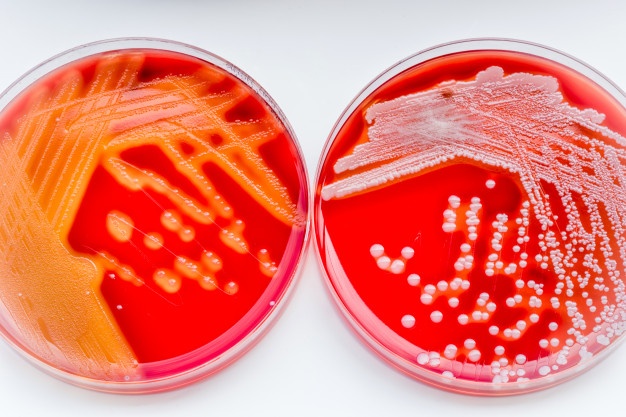
About one in three healthy adults carries Staphylococcus aureus on their skin or in their nose without becoming ill. Yet in some people, the same bacterium causes life-threatening infections. Research by UMC Utrecht PhD candidate Tristan van der Linden provides new insights into why people respond so differently to this common bacterium. The findings could help pave the way for more personalized treatments and, eventually, new preventive therapies.
Staphylococcus aureus is a bacterium that commonly lives on or in the human body. Around one-third of healthy adults carry it without experiencing any symptoms. However, S. aureus can also cause infections with a wide range of clinical manifestations. While most infections are limited to mild skin conditions, in rare cases the bacterium can lead to life-threatening diseases, such as necrotizing pneumonia or severe skin and soft tissue infections. As one of the leading causes of bacterial infections worldwide, S. aureus poses a growing challenge because an increasing number of strains have become resistant to commonly used antibiotics.
Tristan van der Linden, PhD
Despite its widespread occurrence, it remains unclear why some people develop severe infections while others remain unaffected. In his PhD research, Tristan van der Linden (Department of Medical Microbiology, UMC Utrecht) investigated the factors that contribute to the virulence of S. aureus in human.
An important factor that determines the virulence of S. aureus is α-toxin, a cytotoxic protein produced by the bacterium that damages human cells by creating tiny pores in their membranes, causing cellular injury and ultimately cell death. This enables the bacteria to invade tissues, evade the immune system and, ultimately, to cause severe infection. Tristan van der Linden demonstrated that the activity of α-toxin depends on much more than the toxin itself.
Rather than interacting with a single receptor (in this case ADAM10), its ability to damage cells also appeared to be influenced by the composition of the cell membrane, the surrounding environment and the body’s own defence mechanisms.
Another important discovery was the role of tissue acidity. Laboratory experiments by Tristan and colleagues demonstrated that acidic conditions increased the toxin’s damaging effects, while simultaneously reducing the cells’ natural ability to defend themselves. Because inflammation often alters the acidity of infected tissues, these findings suggest that the local environment at the site of infection can have a major impact on disease severity.
The research also identified new insights into a rare inherited disorder caused by changes in the OTULIN gene. Six patients with different genetic variants were found to be extremely vulnerable to severe tissue damage. Remarkably, these patients developed life-threatening skin destruction not only after S. aureus infections, but also after infections with other bacteria or even following minor physical injury.
This study expands the known genetic causes and clinical features of this rare condition, making earlier recognition and treatment more likely. In selected patients, treatment that blocks the inflammatory protein TNF (TNF-inhibitors) proved to be effective in combination with antibiotics.
This project has shown that the severity of a S. aureus infection is determined by a complex interaction between bacterial toxins, the local tissue environment and a person’s genetic makeup. Understanding these factors could help explain why some people develop severe disease while others remain healthy carriers.
Tristan van der Linden concluded: “The global prevalence of S. aureus strains that are resistant to commonly used antibiotics, and the concurrent failure to develop a vaccine against this pathogen highlight the need to understand staphylococcal pathogenesis. However, the significant interindividual variability of disease and the adaptation of the bacterium to the human host complicate our mechanistic understanding of this type of infection as well as the development of novel therapeutics.”
Tristan van der Linden, MSc (1996, Noordwijk) defended his PhD thesis on July 8, 2026 at Utrecht University. The title of his thesis was “Host Determinants of Toxicity and Inflammation: Learning from staphylococcal alpha-toxin.” Supervisor was Prof. Jos van Strijp, PhD and co-supervisors were András Spaan, PhD and Bart Bardoel, PhD (all Department of Medical Microbiology, UMC Utrecht).
Tristan van der Linden works as a postdoctoral researcher at the University of Calgary in Calgary (Canada).