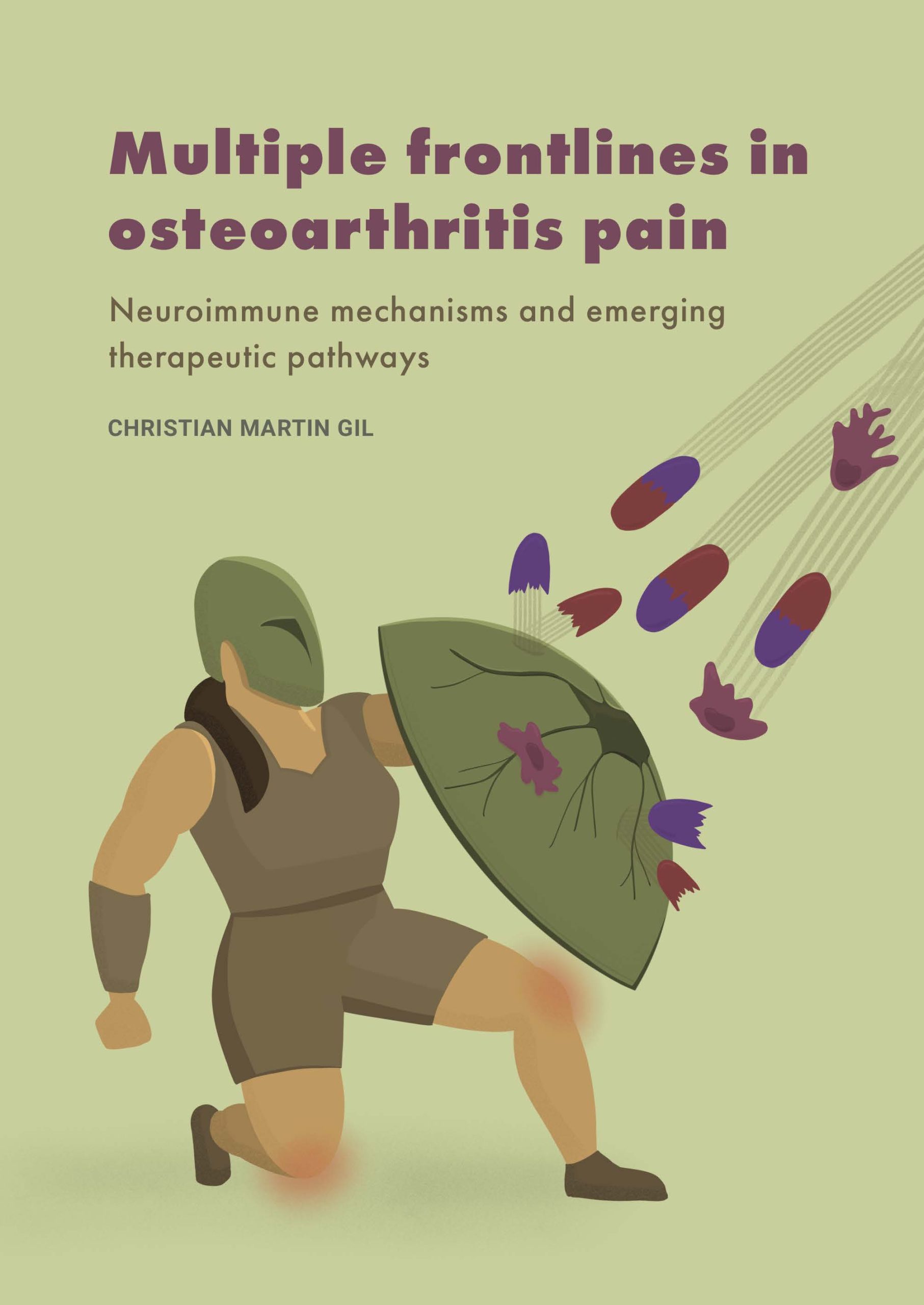
Research by Christian Martín Gil at UMC Utrecht has uncovered new immune-related mechanisms that drive chronic pain in osteoarthritis, offering hope for more effective and personalized treatments for millions of patients worldwide. The findings, presented in his PhD thesis, reveal how immune cells and inflammatory pathways contribute to persistent pain in osteoarthritis, even independently of the joint damage.
Osteoarthritis (OA) is one of the most common joint diseases and a leading cause of disability among older adults. While the condition has traditionally been associated with cartilage degeneration and structural joint damage, pain remains the primary reason why patients seek medical attention. Existing pain treatments, such as analgesics and non-steroidal anti-inflammatory drugs (NSAIDs), are often insufficient or can cause significant side effects. The research by PhD candidate Christian Martín Gil (Center for Translational Immunology, UMC Utrecht) focused on the role of the immune system in sustaining chronic osteoarthritis pain.
In preclinical studies, macrophages (immune cells involved in inflammation) were found to accumulate in the dorsal root ganglia (DRG), clusters of sensory neurons that transmit pain signals from the affected joint to the central nervous system. These macrophages adopted a pro-inflammatory state that contributed directly to ongoing pain. Importantly, the study identified two molecules, myostatin and CXCL11, as key drivers of this process. Myostatin, produced by sensory neurons, appeared to program macrophages into a pain-promoting state, while CXCL11 facilitated the recruitment of macrophages to the DRG. Furthermore, blocking myostatin in a mouse model reduced persistent OA pain, highlighting its potential as a therapeutic target.
Christian Martín Gil, PhD
To translate these findings to patients, Christian’s research also examined cerebrospinal fluid (CSF) and synovial joint tissue samples from people with osteoarthritis. Proteomic analyses identified distinct molecular profiles associated with pain severity and neuropathic pain-like symptoms. Several inflammatory proteins and chemokines, including CXCL9 and CCL23, could discriminate patients according the severity or pain they experienced.
In addition, the study revealed increased expression/abundance of complement factors (proteins involved in immune responses) in synovial tissue from patients experiencing moderate to severe pain. In experimental OA models, targeting complement factor C2 successfully reduced chronic pain, suggesting a promising new therapeutic avenue.
Together, the findings in this PhD project provide new insight into the complex neuro-immune interactions underlying osteoarthritis pain. By identifying molecular pathways that sustain chronic pain, the research opens the door to more targeted and personalized therapies aimed at improving quality of life for OA patients.
Christian Martín Gil (1994, Navarra, Spain) defended his PhD thesis on May 8 16, 2026 at Utrecht University. The title of his thesis was “Multiple Frontlines in Osteoarthritis Pain: Neuroimmune Mechanisms and Emerging Therapeutic Pathways.” Supervisors were Prof. Niels Eijkelkamp, PhD (Center for Translational Immunology, UMC Utrecht) and Simon Mastbergen, PhD (Department of Rheumatology & Clinical Immunology, UMC Utrecht). In 2025, Christian continued his career as a postdoc in the group of Balthasar Heesters, PhD (Utrecht University), where he studies follicular dendritic cells within germinal centers in the context of immune regulation and vaccine responses.