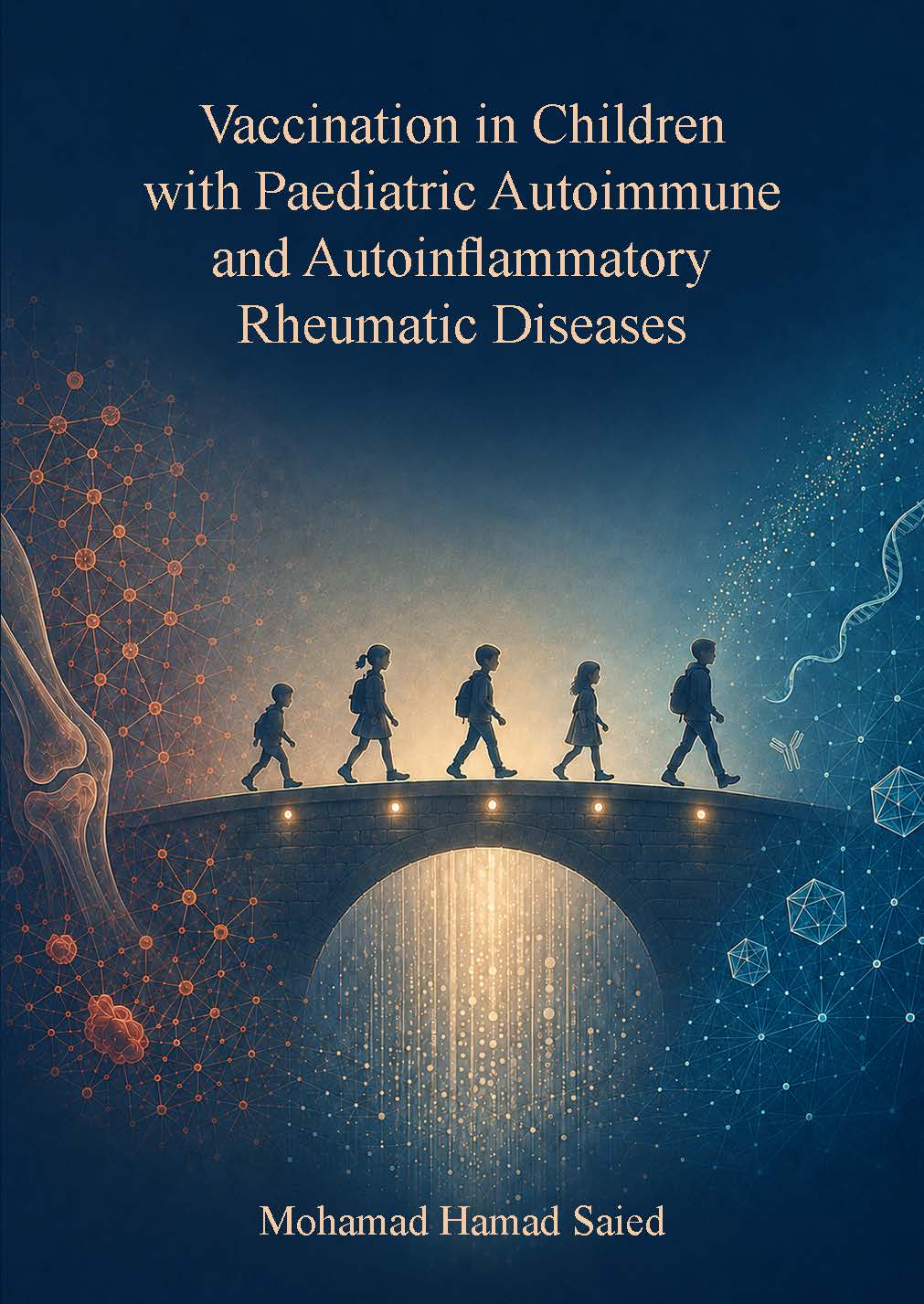
Research by UMC Utrecht PhD candidate Mohamad Hamad Saied, MD supports more individualized vaccination decisions for children with autoimmune and autoinflammatory rheumatic diseases. His findings offer reassurance about vaccine safety and highlight when additional monitoring may help guide care.
Children with autoimmune and autoinflammatory rheumatic diseases face an increased risk of infections because of their condition and immunomodulatory treatment. Yet uncertainty about vaccine safety, effectiveness and duration of protection can lead to vaccination being postponed, leaving these children exposed to potentially preventable illness. The PhD project of Mohamad Hamad Saied, MD (Department of Pediatric Immunology and Rheumatology, UMC Utrecht) addressed these evidence gaps. He examined vaccine safety and immune responses in clinical practice, helping clinicians make informed vaccination decisions for these children.
In a study among 186 children with juvenile idiopathic arthritis (JIA), the measles, mumps and rubella (MMR) booster as part of the Dutch national immunization program was not associated with significantly increased disease activity. At the time of vaccination, 51 percent of the patients used conventional disease-modifying antirheumatic drugs, whereas 28 percent used biological therapy. Mild adverse events occurred in 7 percent; no serious adverse events were reported. These findings offer reassurance about MMR booster vaccination in children with JIA, including those receiving conventional or biological treatment.
In a long-term follow-up study of 182 children with JIA found that, five years after the MMR booster, 60 percent of those receiving biologics at vaccination retained measles antibody levels above the protective threshold, compared with 86 percent of those not receiving biologics. Mohamad Hamad Saied therefore proposes considering targeted antibody testing around five years after vaccination in children who received the booster while on biological therapy. The results could inform a specialist assessment of whether an additional dose is appropriate. However, he also emphasized that low antibody levels alone do not prove a child is unprotected, because immune memory may still contribute to the protective effect of vaccination.
In a COVID-19 vaccination study involving 157 patients with autoimmune and autoinflammatory rheumatic diseases (mostly JIA), biologic-treated children had lower antibody levels but no higher symptomatic infection rate than vaccinated children not receiving biologics. Adequate T-cell responses were found in 91 percent of the patients tested. No serious vaccine-related adverse events were reported. The findings suggest that antibody levels alone do not capture the full vaccine response.
Mohamad Hamad Saied concluded: “Our findings support reviewing of the vaccination status in patients with JIA or other autoimmune and autoinflammatory rheumatic diseases at diagnosis and when treatment changes. For complex cases, collaboration with immunology and infectious disease specialists can help to guide decisions for individual patients. In addition, the studies in my thesis provide the foundation for larger, prospective work that can now be designed with greater precision.”
Mohamad Hamad Saied, MD PhD defended his PhD thesis in October, 2026 at Utrecht University The thesis is titled “Vaccination in Children with Paediatric Autoimmune and Autoinflammatory Rheumatic Diseases – Evidence on Safety, Immunogenicity and Effectiveness Across Live-Attenuated, mRNA and Recombinant Vaccines.” His supervisors are Joris van Montfrans, MD PhD and Prof. Bas Vastert, MD PhD and his co-supervisors are Marc Jansen, MD PhD and Joost Swart, MD PhD, all from the Department of Pediatric Immunology and Rheumatology, UMC Utrecht.