Researchers at UMC Utrecht have received a ZonMW/KCE BeNeFIT grant to start a new clinical study on surgery for cholesteatoma, an abnormal growth from the eardrum that causes amongst others hearing loss. In the study, they will compare two surgical techniques to find out which approach best prevents the disease from coming back while preserving hearing.
Cholesteatoma is a chronic ear condition in which dead skin cells build up in the middle ear, the space behind the eardrum. This build-up can damage nearby tissue such as the facial nerve and structures in the inner ear. Patients may experience hearing loss, tinnitus, changes in taste, ear pain, unilateral facial palsy, dizziness, or fluid coming from the ear. Each year, approximately 1,600 people in the Netherlands get diagnosed with cholesteatoma.
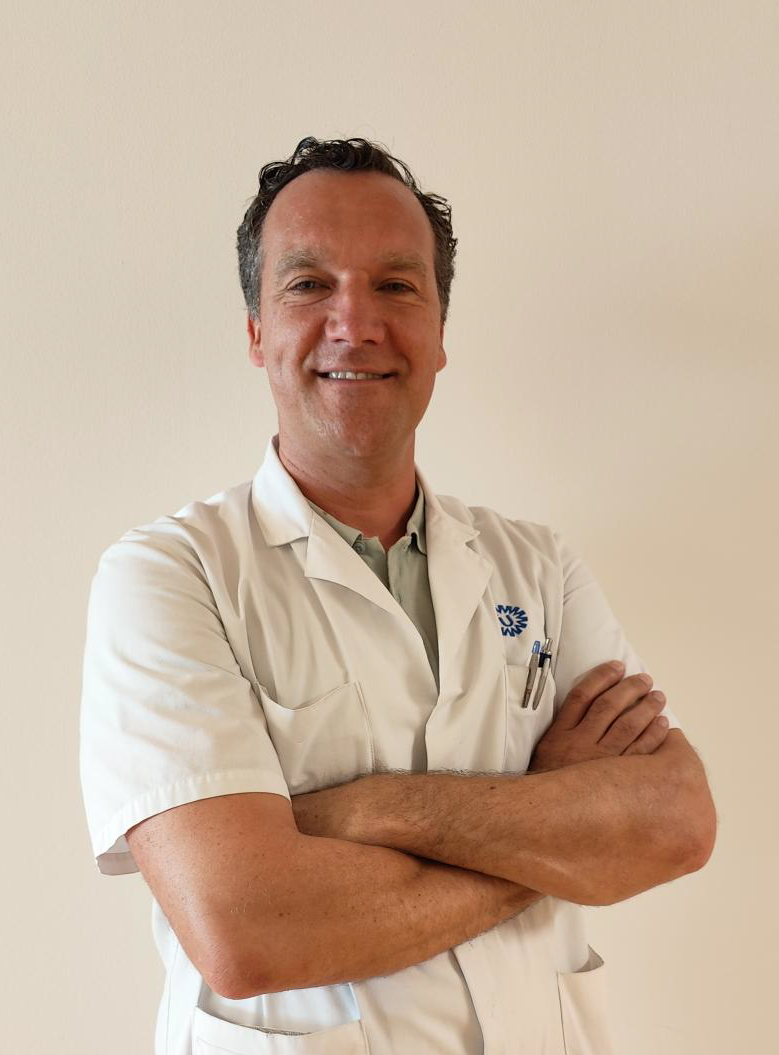
Hans Thomeer, associate professor at UMC Utrecht and principal investigator of this study.
Surgeons treat cholesteatoma by removing the build-up of skin cells and creating a safe, dry ear. However, surgery does not always remove the disease completely. Small parts of the cholesteatoma may remain, or thecondition may return over time. If that happens, symptoms can come back and patients will need revision surgery.
To reduce this risk, surgeons can use a technique called obliteration. During this procedure, they fill the space created during surgery. This may prevent the eardrum from being pulled back, lowering the chance of cholesteatoma returning.
Although surgeons already use obliteration in clinical practice in some countries, strong evidence on its long-term outcomes is still lacking. As a result, surgeons may make different treatment decisions, often based partly on their own experience and preference, instead of evidence.
In this study, researchers will directly compare surgery with and without obliteration. They will examine whether obliteration reduces the risk of cholesteatoma returning or remaining after surgery, and whether hearing and quality of life improves.
With this study, the researchers aim to identify which surgical approach offers the best long-term results. These findings may help physicians make more evidence-based treatment decisions, show ways to reduce health care costs and improve quality of life for people with cholesteatoma.
This study is a collaboration between UMC Utrecht and KU Leuven, coordinating a consortium of a total of seven medical centers in the Benelux. Together, they have received a total grant of 1.1 million euros to comparesurgical techniques for cholesteatoma. UMC Utrecht leads the consortium, with Hans Thomeer as principal investigator. KU Leuven coordinates the study in Belgium.
BeNeFIT (Belgium-Netherlands Funding of International Trials) is a competitive funding programme for healthcare professionals to perform large, multicentric, randomised clinical trials to answer important healthcare questions. The programme is a collaboration between 2 funders, the Belgian Health Care Knowledge Centre (KCE) and ZonMw, the Netherlands Organisation for Health Research and Care innovation, who have been funding this joint call since 2018.