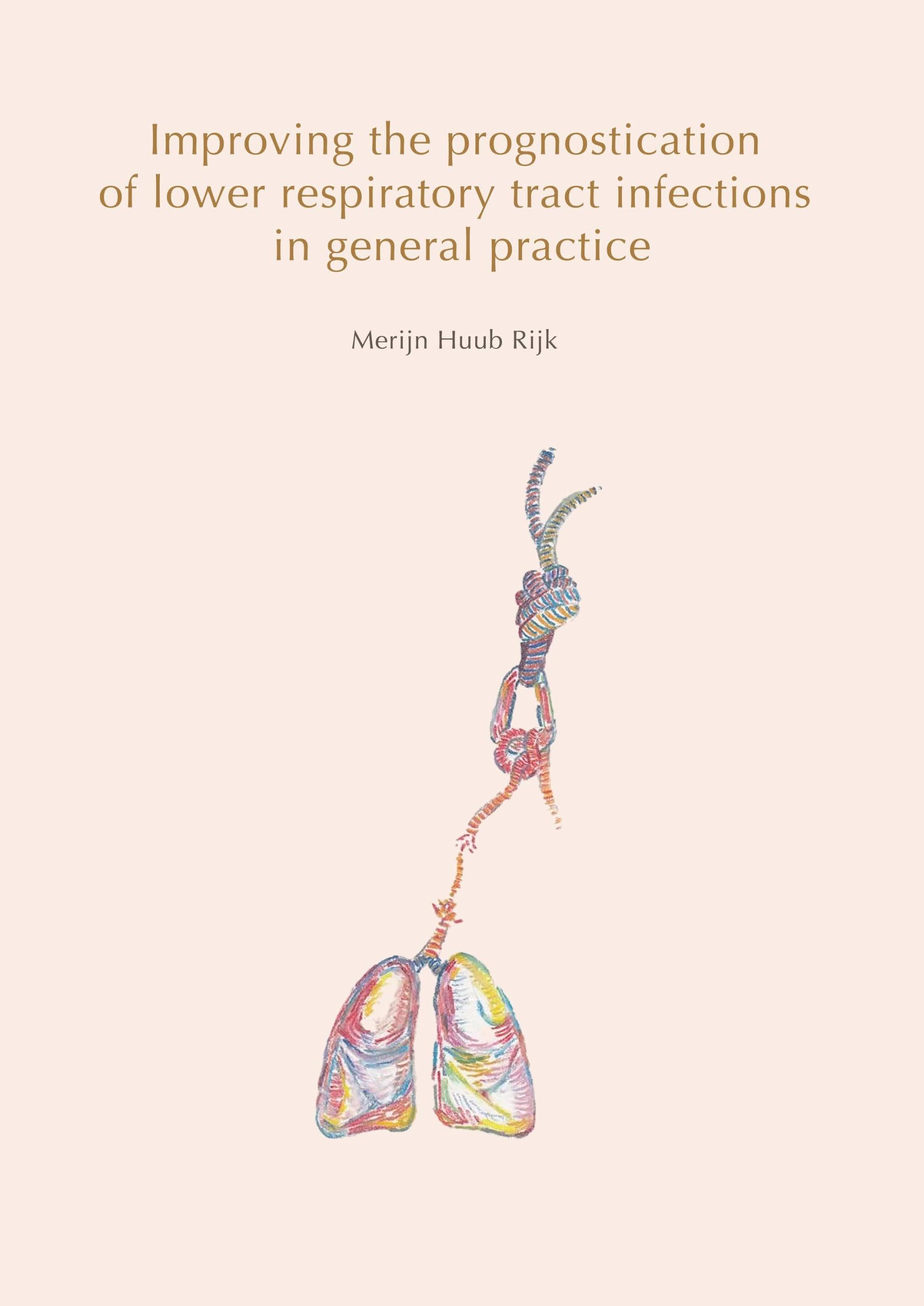
Lower respiratory tract infections are among the most common conditions seen in general practice. Most patients recover without complications, but some deteriorate and require hospitalization or may even die. Research by UMC Utrecht PhD candidate Merijn Rijk shows that routinely collected health data can help GPs identify patients at increased risk. His research also shows that respiratory infections temporarily increase the risk of cardiovascular complications.
Around three percent of the Dutch population is diagnosed with a lower respiratory tract infection (LRTI) each year. For general practitioners (GPs), an important challenge is distinguishing patients likely to recover uneventfully from those at risk of serious complications. Existing prediction models were mostly developed for hospitalized patients and are not sufficiently reliable for routine use in general practice.
As part of his PhD research, Merijn Rijk, MD (Department of General Practice & Nursing Science, UMC Utrecht) developed a prediction model using routinely collected electronic health record data. It estimates the individual risk of hospitalization or death within 30 days for patients aged 40 and over presenting to their GP with an LRTI.
The new model uses information already available in the patient record, including age, sex, previous hospitalization, pneumonia diagnosis, medication use and conditions such as diabetes, heart failure, COPD, cancer and dementia. It was developed with pre-pandemic data from the Utrecht region and validated using post-pandemic data from Amsterdam, and predicted risks ranged from 1.5 to 51.3 percent for hospitalization or death within the first 30 days after diagnosis in patients of 40 years and older presenting with a LRTI.
Because the required information is already recorded electronically, the model could eventually be integrated into GP information systems and provide a real-time risk estimate during a consultation. This could help GPs to identify patients who need closer monitoring or additional care. Prior to implementation, however, research must establish whether use of the model actually improves patient outcomes.
Rijk also investigated whether artificial intelligence (AI) could extract additional information on signs and symptoms from GPs’ clinical notes. AI was reasonably successful at identifying signs and symptoms, but adding these data to the model only marginally improved risk prediction. This suggests that structured information already available in electronic health records may be sufficient.
A second important finding in Merijn Rijk’s PhD research was that an LRTI can temporarily trigger cardiovascular problems. The risk of heart attack, stroke or transient ischemic attack, venous thromboembolism and newly diagnosed atrial fibrillation was particularly increased during the first week after an infection. Rijk estimates that approximately 5 to 9 additional cardiovascular events per 1,000 patients of 40 years and older with an LRTI can be attributed to the infection.
The findings identify LRTIs as an undervalued cardiovascular risk factor. Greater awareness among GPs could support earlier recognition of complications, while preventive strategies might eventually focus on patients at highest risk. Even a relatively small individual risk is relevant at population level because respiratory infections affect large numbers of people, particularly during seasonal outbreaks.
At the same time, Rijk cautions against simply screening or treating more patients. Preventive strategies should focus on those most likely to benefit, avoiding unnecessary diagnoses, (over)treatment and additional pressure on healthcare resources. Patients and healthcare professionals should therefore help determine appropriate risk thresholds and interventions.
Together, the findings offer a route towards more personalized care: using information already available to identify high-risk patients while focusing healthcare resources where they are most likely to make a difference.
Merijn Rijk, MD (1993, Breda) defended his PhD thesis on September 15, 2026 at Utrecht University. The title of his thesis was “Improving the prognostication of lower respiratory tract infections in general practice.” Supervisors were Prof. Roderick Venekamp, MD PhD and Prof. Frans Rutten, MD, PhD. Co-supervisor was Tamara Platteel, MD PhD (all Department of General Practice & Nursing Science, UMC Utrecht). Currently, Merijn Rijk is in training at UMC Utrecht to become a general practitioner.