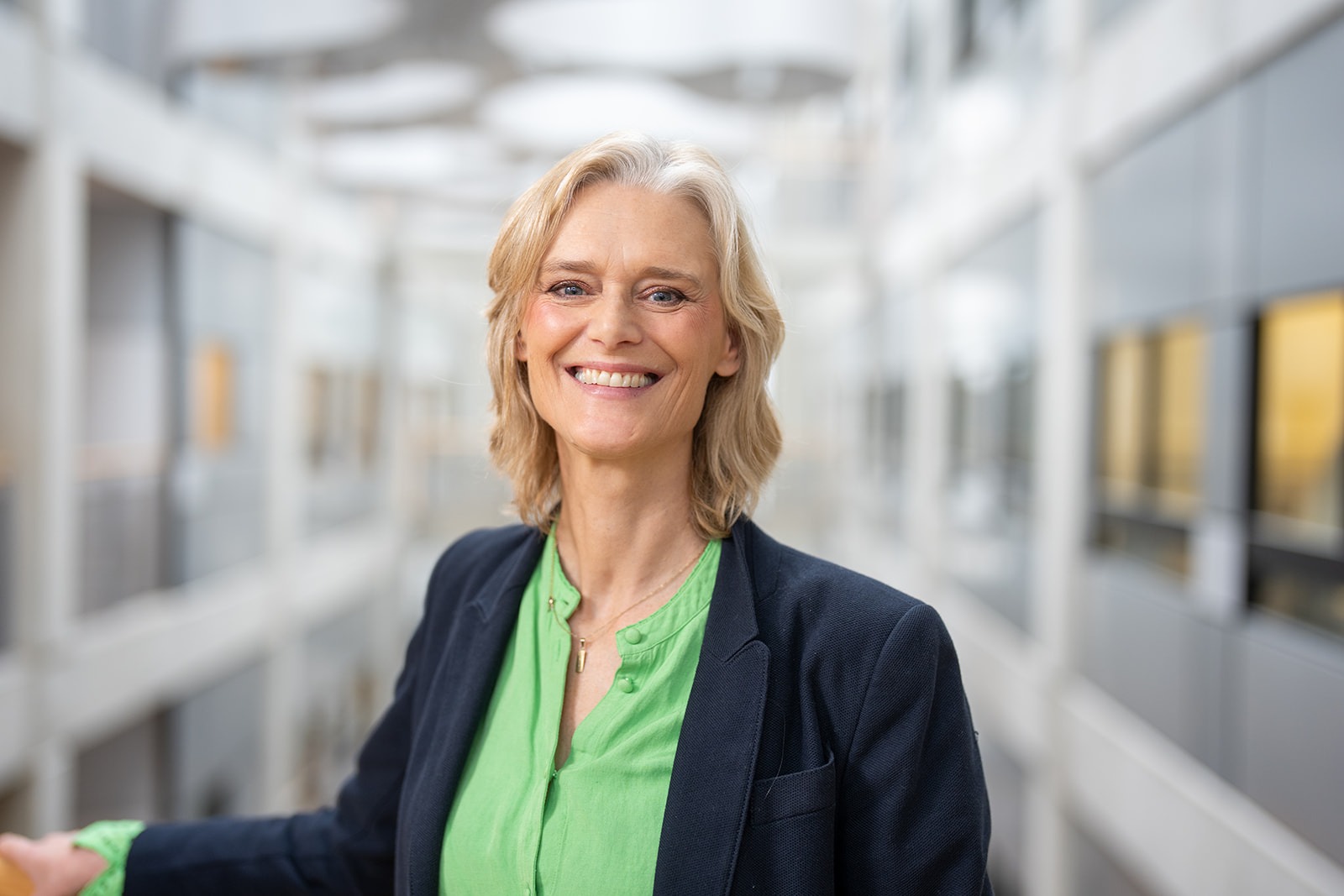
Madelon Maurice, researcher at the Center for Molecular Medicine at UMC Utrecht and the Oncode Institute, is one of the seven principal investigators in the international research team REWIRE-CAN. Together with researchers from the United Kingdom and the United States, she has received a prestigious Cancer Grand Challenge (CGC) grant of up to £20 million over approximately five years to develop a radical new approach to colorectal cancer.
Colorectal cancer is the second most common cause of cancer death, and the number of diagnoses is increasing, especially among young adults. “Not all tumors respond well to existing therapies, such as chemotherapy and targeted treatments”, explains Maurice. “This is because cancer cells carefully calibrate their own growth signals: they create an optimal amount of signaling that promotes their growth and survival. Scientists also call this the Goldilocks condition, after the fairy tale of the same name. Not too much, not too little, but just right.”
Until now, scientific research has primarily focused on inhibiting these signals, with the idea that blocking growth signals would stop the tumor from growing. Maurice: “That works partially, but a significant proportion of patients develop resistance or don’t respond to treatment at all. Some cancer cells can even enter a kind of hibernation, temporarily ‘evading’ treatment and then becoming active again later.”
The REWIRE-CAN team is therefore opting for a completely different strategy: hyperactivation of signaling pathways. Instead of blocking signals, the researchers will overactivate existing growth signals in cancer cells. This can lead to the cells becoming overloaded and dying, or to them being pushed back to a state where they are sensitive to existing treatments. “Initial results show that cancer cells are often more sensitive to overactivation than healthy cells”, says Maurice. “By controlling the amplification of signaling pathways, we can make the cancer cells treatable again. This is a completely different perspective than what we’re used to in cancer research.”
A key pillar of the research is the use of organoids, miniature tumors grown in the lab from patient tissues. Maurice: “We have collectively collected a large number of organoids, derived from primary tumors and metastases, from various subtypes of colon cancer. These models allow us to test treatments in a controlled environment before we study them in animals or humans.”
The researchers are testing combinations of activators and existing therapies on organoids to determine which is most effective. They are measuring not only cell growth but also genetic changes, protein production, and metabolism. “This allows them to pinpoint which patients are likely to benefit most from the treatment,” Maurice explains. The ultimate goal is to translate these discoveries into clinical practice. Maurice emphasizes that many steps are still needed before this can be applied to humans. “We need to carefully investigate which dosages are safe, which combinations work, and which patients benefit most. But our goal is to ultimately conduct a trial in patients with treatment-resistant colon cancer.”
REWIRE-CAN brings together researchers from the United Kingdom, the Netherlands, and the United States, along with experts in cancer biology, chemical development, clinical research, and drug screening. Maurice’s expertise lies in the WNT signaling pathway, which is dysregulated in 90% of colorectal cancer patients. Through her work at the Oncode Institute, she makes a significant contribution to the development of new activators and treatment strategies within the REWIRE-CAN team. Laigo Bio, the spinout company that she co-founded, will be a collaborator in the project.
The beauty of this project, says Maurice, is the collaboration. “Everyone contributes their own expertise, and together we can tackle a much more complex challenge than any team could on its own. Our shared goal: to reprogram cancer cells and thus develop a new therapeutic pathway that truly benefits patients.”
| Team | Institute | Country |
|---|---|---|
| Bart Vanhaesebroeck | UCL | United Kingdom |
| Karuna Ganesh | MSKCC | United States |
| Smita Krishnaswamy | Yale University | United States |
| Vivian Li | Francis Crick Institute | United Kingdom |
| Madelon Maurice | UMC Utrecht | The Netherlands |
| William Sellers | Broad Institute | United States |
| Chris Tape | UCL | United Kingdom |
| Steve Wedge | Cancer Research Horizons | United Kingdom |
| Roger Williams | MRC LMB | United Kingdom |
Cancer Grand Challenges was co-founded in 2020 by Cancer Research UK and the National Cancer Institute in the US. The initiative supports international, multidisciplinary research teams to address major challenges in cancer research. The REWIRE-CAN team is funded by Cancer Research UK, the National Cancer Institute, the Bowelbabe Fund for Cancer Research UK and Yosemite (oncology-focused venture firm).
More information at: New Teams Announcement | Cancer Grand Challenges