Associate Professor
Strategic program(s):
Biography
[will follow shortly]
Research interests
In collaboration with Datacation, UMC Utrecht is developing an artificial intelligence (AI) solution for the early detection of isolated local pancreatic cancer recurrence. This project is co-funded by the European Union through the Kansen voor West programme.
Background and challenge
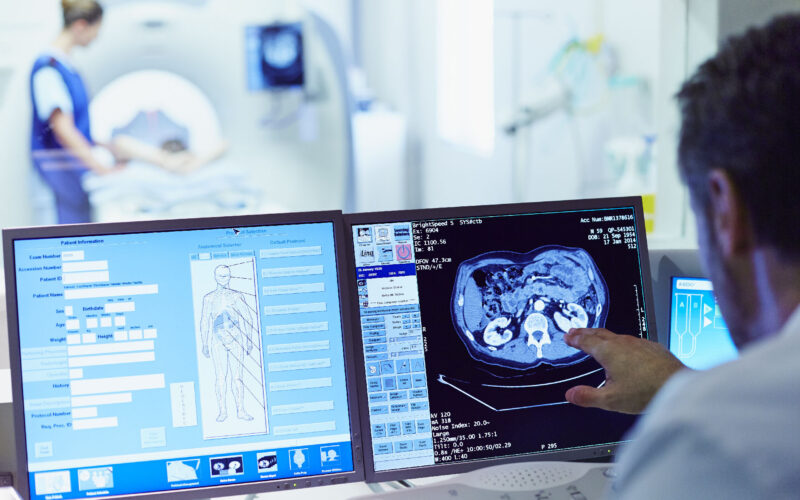
Pancreatic cancer is a highly aggressive malignancy, with >80% of patients developing disease recurrence within two years after surgical resection. Early, accurate detection of recurrence is critical for timely treatment initiation and to reduce uncertainty for patients with regard to their diagnosis and corresponding prognosis. However, on postoperative CT imaging, distinguishing between tumor recurrence and postoperative fibrotic tissue remains challenging, even for experienced radiologists, as both can present with similar radiological characteristics.
AI-based image analysis offers a promising solution by enabling the detection of subtle imaging patterns and facilitating the rapid analysis of large volumes of scans.
Methodological approach and collaboration
Within this collaboration, Datacation has developed an AI model capable of automatic pancreas recognition and segmentation on CT scans after resection. Postoperative anatomical variability presents a substantial challenge: surgical resection often alters pancreatic anatomy, rendering conventional segmentation models suboptimal.
To address this, the developed model employs an encoder-decoder architecture enhanced with an attention mechanism, allowing it to better adapt to inter-patient variability. This work has resulted in a peer-reviewed scientific publication (https://pubmed.ncbi.nlm.nih.gov/41307673/).
Building on this foundation, ongoing work focuses on developing an AI model for automated detection of tumor recurrence following surgery. A key aspect of this development is model explainability. The system is designed to provide visual explanations, highlighting regions within CT images that contribute to classification decisions (e.g., fibrosis versus suspected tumor recurrence). These visualizations aim to support radiologists in interpreting model outputs and enhance trust in clinical decision-making.
Expected impact
This project represents an active collaboration between UMC Utrecht and Datacation, supported by European Union funding. The ultimate goal is to integrate the final AI model into clinical workflows, where it can assist radiologists in evaluating postoperative CT scans.
By enabling faster and more accurate detection of pancreatic cancer recurrence, the approach has the potential to facilitate earlier therapeutic intervention and reduce uncertainty for patients. This may contribute to improved treatment outcomes, increased survival rates, and enhanced quality of life for patients.


Research aim
The pace of innovation in (AI driven) imaging/image-guided interventions in oncology is high; the window of opportunity for evaluation narrow. We aim to learn from every patient, in order to facilitate evidence-based implementation of innovation.
Go to group