Immunotherapy has transformed treatment for metastatic melanoma, but up to half of patients do not benefit, while some experience serious side effects. PhD research by UMC Utrecht researcher Mark Schuiveling shows that artificial intelligence (AI) can identify patterns in routinely collected tumor tissue that help predict treatment response and survival. His findings offer opportunities for more personalized cancer treatment, potentially reducing unnecessary toxicity and healthcare costs.
Treatment with immune checkpoint inhibitors has substantially improved survival for patients with metastatic melanoma, an aggressive form of skin cancer which is diagnosed in more than 9.000 patients in the Netherlands each year. However, predicting who will benefit remains challenging. Within the multicenter PREMIUM project, Mark Schuiveling, MD PhD (Department of Medical Oncology, UMC Utrecht) investigated whether AI analysis of standard pathology slides and CT scans could improve treatment predictions beyond existing clinical indicators.
A major finding in Mark’s PhD research concerns tumor-infiltrating lymphocytes (TILs), immune cells that enter tumors and help to attack cancer cells. Using AI to analyze tissue samples from 1,202 patients (the largest cohort to date) with metastatic melanoma, the researchers found that higher TIL levels were strongly associated with better immunotherapy outcomes.
For every 10-percentage-point increase in AI-detected TILs, patients had 40 percent higher chance of responding to treatment, alongside a 15 percent lower risk of disease progression and a 17 percent lower risk of death during follow-up.
AI-based assessment also showed stronger associations with treatment outcomes than manual scoring by pathologists. Importantly, tissue from metastases collected before treatment proved informative, whereas samples from the original primary melanoma did not.
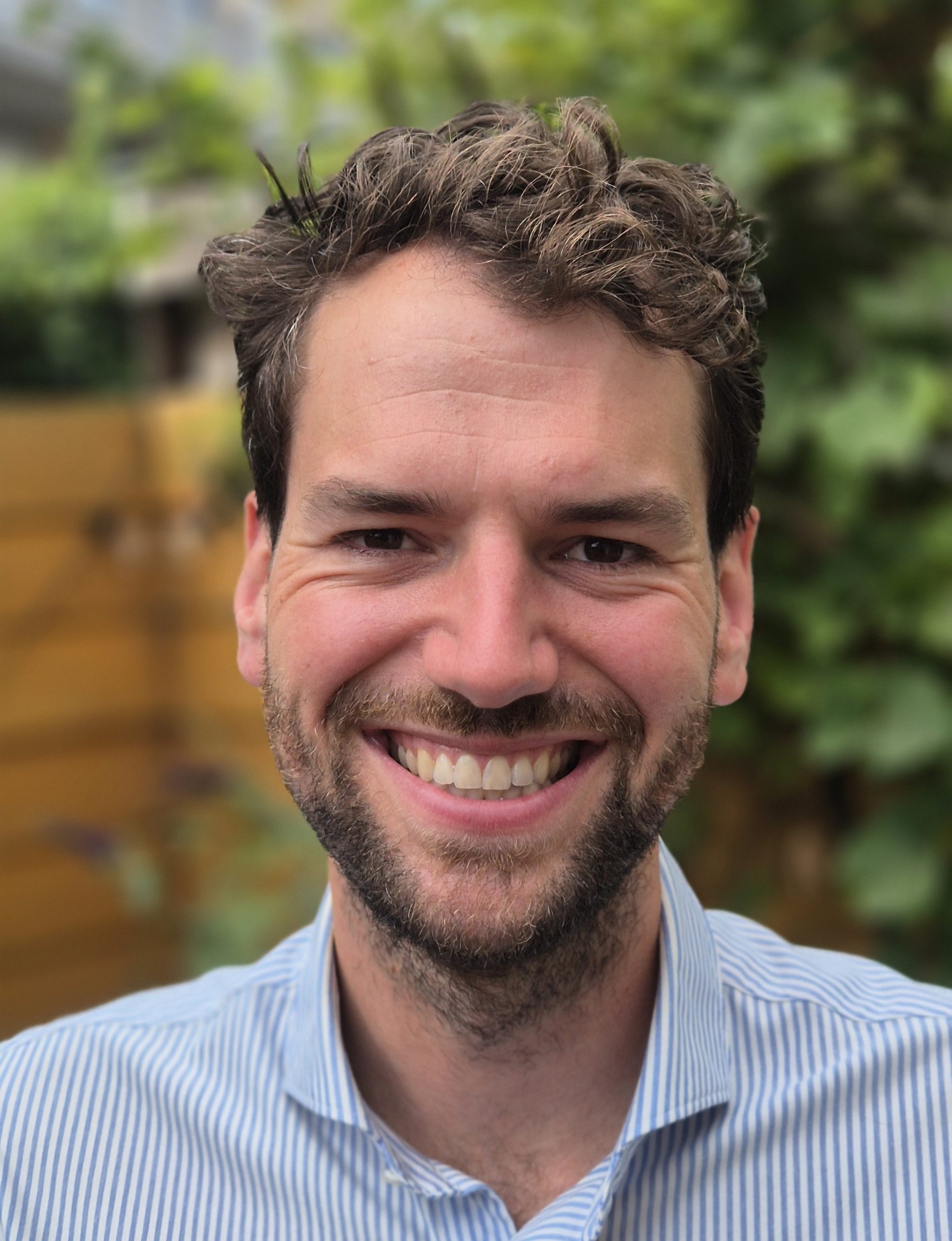
Mark Schuiveling, MD PhD
Mark Schuiveling subsequently investigated more advanced AI models capable of analyzing entire pathology images. In 1,177 patients, treatment response rates ranged from 44 percent in the lowest predicted-response group to 68 percent in the highest. Beyond immune-cell infiltration, the models identified tumor-cell morphology and tissue necrosis as features associated with treatment outcomes. However, their predictive accuracy remains insufficient to reliably identify patients who will not benefit from immunotherapy.
The thesis also investigated the role of body composition using CT scans from 1,471 melanoma patients. Lower skeletal muscle density and being underweight were associated with poorer outcomes, but body composition did not independently predict immunotherapy response. Neither body composition nor TIL density reliably predicted severe immune-related side effects.
Mark Schuiveling concluded: “Our research demonstrates how routinely available medical images can provide valuable information without additional invasive procedures or costly laboratory tests. However, before implementation, prospective validation and studies demonstrating improved clinical decision-making are essential. Ultimately, the combination of imaging-based AI with clinical and molecular data could help physicians select more appropriate treatments, improve patient outcomes and reduce unnecessary treatment-related harm and healthcare expenditure.”
The Predicting Response to Immunotherapy Using Machine Learning (PREMIUM) cohort study – coordinated by Prof. Karijn Suijkerbuijk, MD PhD at UMC Utrecht – explores how AI can improve predictions of immunotherapy response in patients with metastatic melanoma. Eleven Dutch melanoma reference centers participated in this project. Combining clinical characteristics with AI analysis of pathology images provides additional insights into treatment outcomes. These findings could support more personalized treatment decisions, helping patients and clinicians balance potential benefits, risks and alternatives.
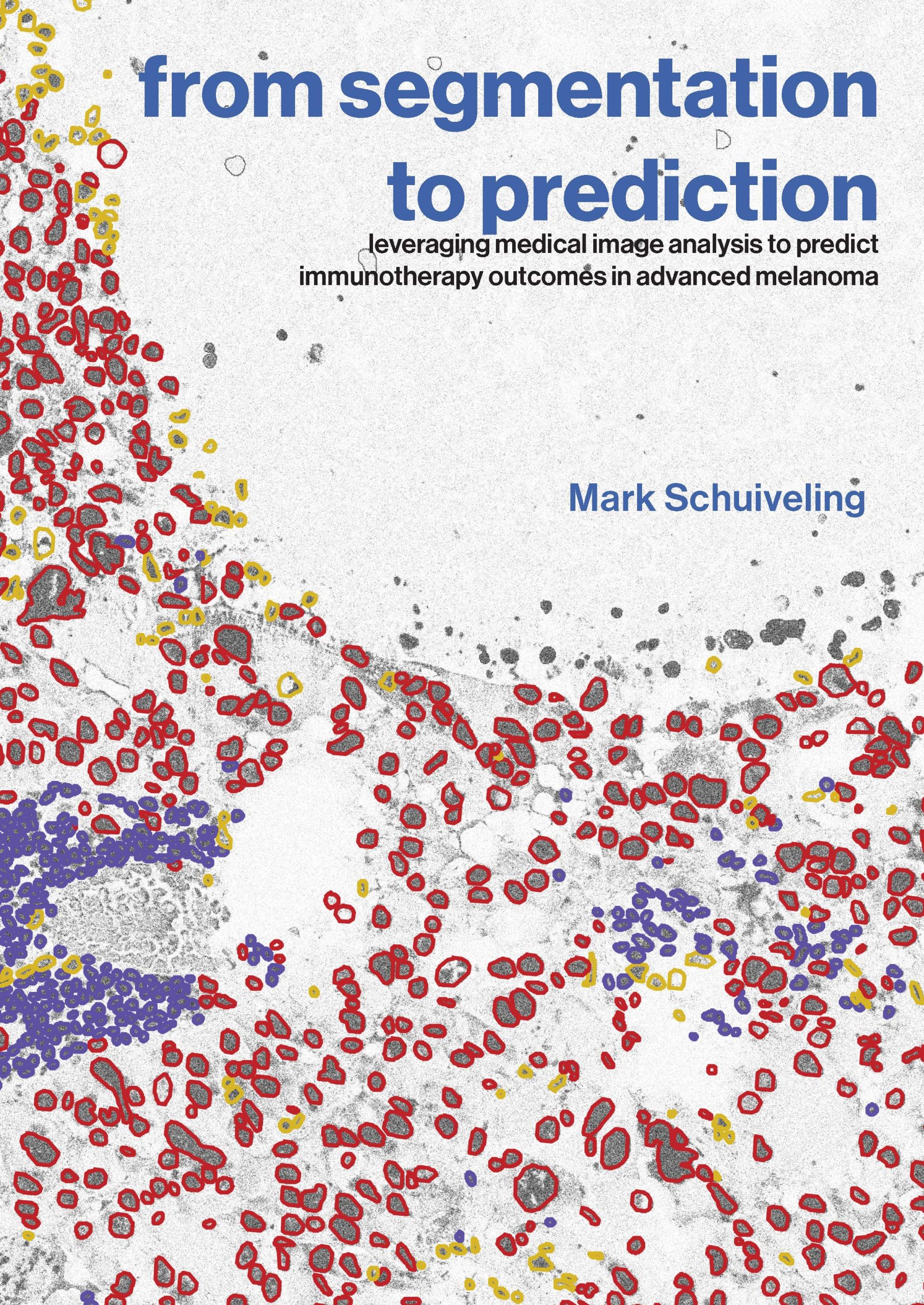
Mark Schuiveling, MD PhD (1993, Woerden) defended his PhD thesis on November 9, 2026 at Utrecht University. The thesis was titled “From segmentation to prediction: leveraging medical image analysis to predict immunotherapy outcomes in advanced melanoma.” Supervisors were Prof. Karijn Suijkerbuijk, MD PhD (Department of Medical Oncology, UMC Utrecht), Willeke Blokx, MD PhD (Department of Pathology, UMC Utrecht) and Mitko Veta, PhD (Eindhoven University of Technology, Eindhoven). Mark is continuing his medical education at UMC Utrecht to become a medical oncologist.