Use of real-word data has shown to be increasingly important in the detection of rare adverse events of COVID-19 vaccines. Findings by Laura Zwiers (UMC Utrecht) – using real-world data – confirm that rare cardiac events such as myocarditis and pericarditis occurred slightly more often after vaccination than during the pre-pandemic period, but much less often than after SARS-CoV-2 infection. In addition, males had a higher risk than females to develop myocarditis and pericarditis after vaccination. Finally, younger age, previous SARS-CoV-2 infection, and prior poor health may increase the risk of myocarditis and pericarditis.
During the pandemic, many randomized controlled trials (RCTs) were launched to evaluate coronavirus treatments and vaccines. However, limited time and resources meant that many important questions could not be answered efficiently through RCTs alone. This led to growing interest in real-world data (RWD) and real-world evidence (RWE). RWD includes health information collected from sources such as electronic health records and wearable devices. RWE refers to insights gained by analyzing RWD and complements findings from traditional RCTs, which often lack generalizability to broader populations, healthcare systems, and daily clinical practice. Regulatory authorities are increasingly recognizing the value of RWE in assessing drug safety and efficacy, using it to supplement traditional RCTs in the drug approval process.
The PhD thesis of epidemiologist and data scientist Laura Zwiers, MPhil PhD (Department of Global Public Health and Bioethics, UMC Utrecht) explored applications of RWD and RWE to study rare adverse events associated with mRNA corona vaccines.
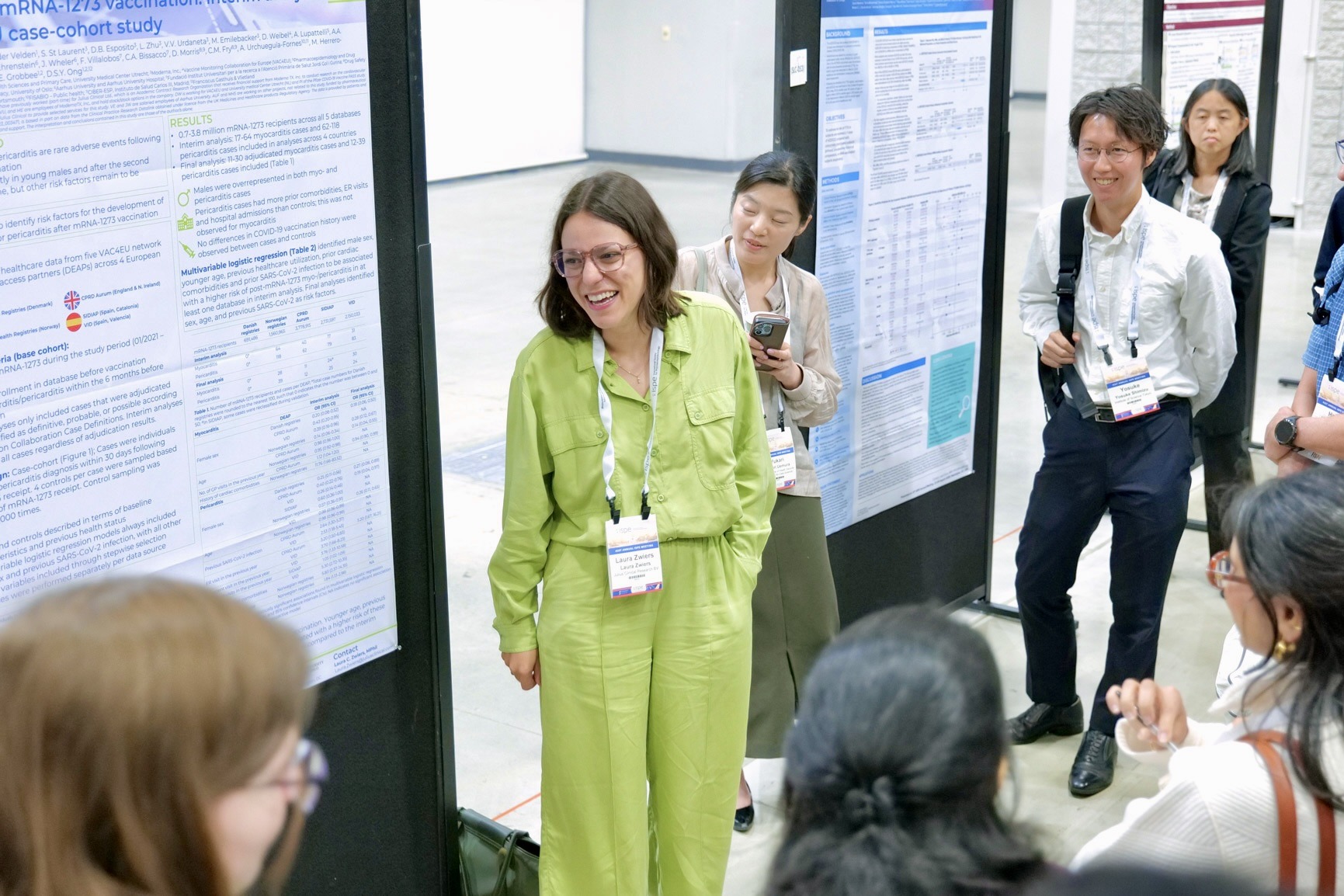
Laura Zwiers MPhil PhD presents her results
As part of the Vaccine Monitoring Collaboration for Europe (VAC4EU) association, Zwiers and co-workers investigated the occurrence of myocarditis and pericarditis following the mRNA-1273 COVID-19 vaccine (Spikevax, Moderna), using routinely collected healthcare data from four European countries. This study found a pooled incidence of myocarditis and pericarditis of 17.9 and 29.2 per million vaccine recipients, respectively. This was slightly higher as compared to the pre-pandemic period, but much lower as compared to SARS-CoV-2 infection.
The findings also suggested that male sex, younger age, previous SARS-CoV-2 infection, and prior poor health may increase the risk of rare cardiac events. In addition, patients who were older and had pre-existing poor health were more likely to experience complications after myocarditis or pericarditis.
Wearable devices are widely used for tracking physical activity and other behaviors by measuring metrics such as steps taken, energy expenditure, sleep patterns, and physiological parameters. Through continuous monitoring, they generate large amounts of RWD that can be used to conduct large-scale research. In a pandemic context, rapid and early detection of infections using RWD could be of help in reducing virus spread.
As part of her PhD project, Laura Zwiers also presented results of the COVID-RED trial, which investigated if a wearable device (Ava bracelet) could detect SARS-CoV-2 infections and enrolled nearly 18,000 participants. An algorithm based on data from the wearable device was able to detect many infections, even before symptom onset, but also produced numerous false positive alerts. An analysis of study retention during the trial suggested that age, employment situation, living situation, and COVID-19 vaccination were linked to retention.
Overall, these findings highlight a potential role of wearable devices in early detection of SARS-CoV-2. The experimental algorithm overestimated infections, but future iterations could finetune the algorithm to improve specificity and enable it to differentiate between respiratory illnesses.
Laura Zwiers concluded: “RWE can and will be of utmost importance when a new global health emergency hits. RWD provide many opportunities for research, but optimal research can only be achieved when certain minimal standards are met. To be better prepared for a next pandemic, we need improved regulatory guidelines, expanded data availability, and enhanced analysis infrastructures. Necessary improvements are not limited to these three recommendations, and other ways to further optimize data science should be explored, especially as novel public health threats will require novel solutions.”
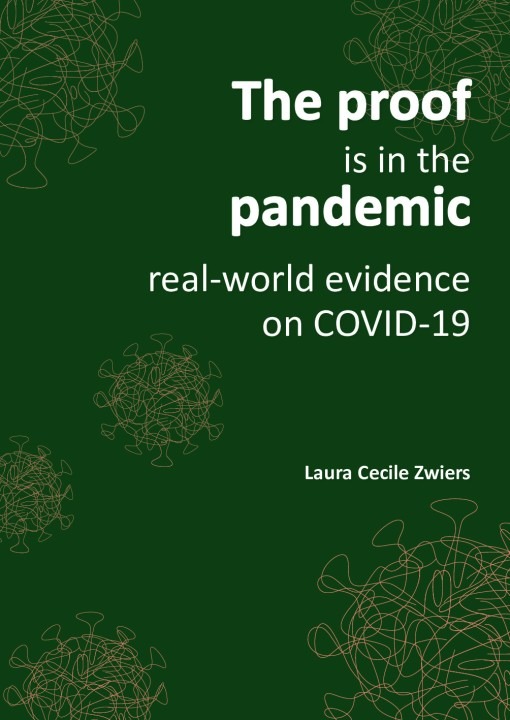
Laura Zwiers, MPhil MSc (1998, Gouda) defended her PhD thesis on February 12, 2026, at Utrecht University. The title of her thesis was “The proof is in the pandemic: real-world evidence on COVID-19.” Supervisor was Prof. Rick Grobbee, MD PhD (Department of Global Public Health and Bioethics, UMC Utrecht) and co-supervisor was David Ong, MD PharmD (Department of Epidemiology, UMC Utrecht). Laura Zwiers works as a data analyst at health data science consultancy Logex in Amsterdam.