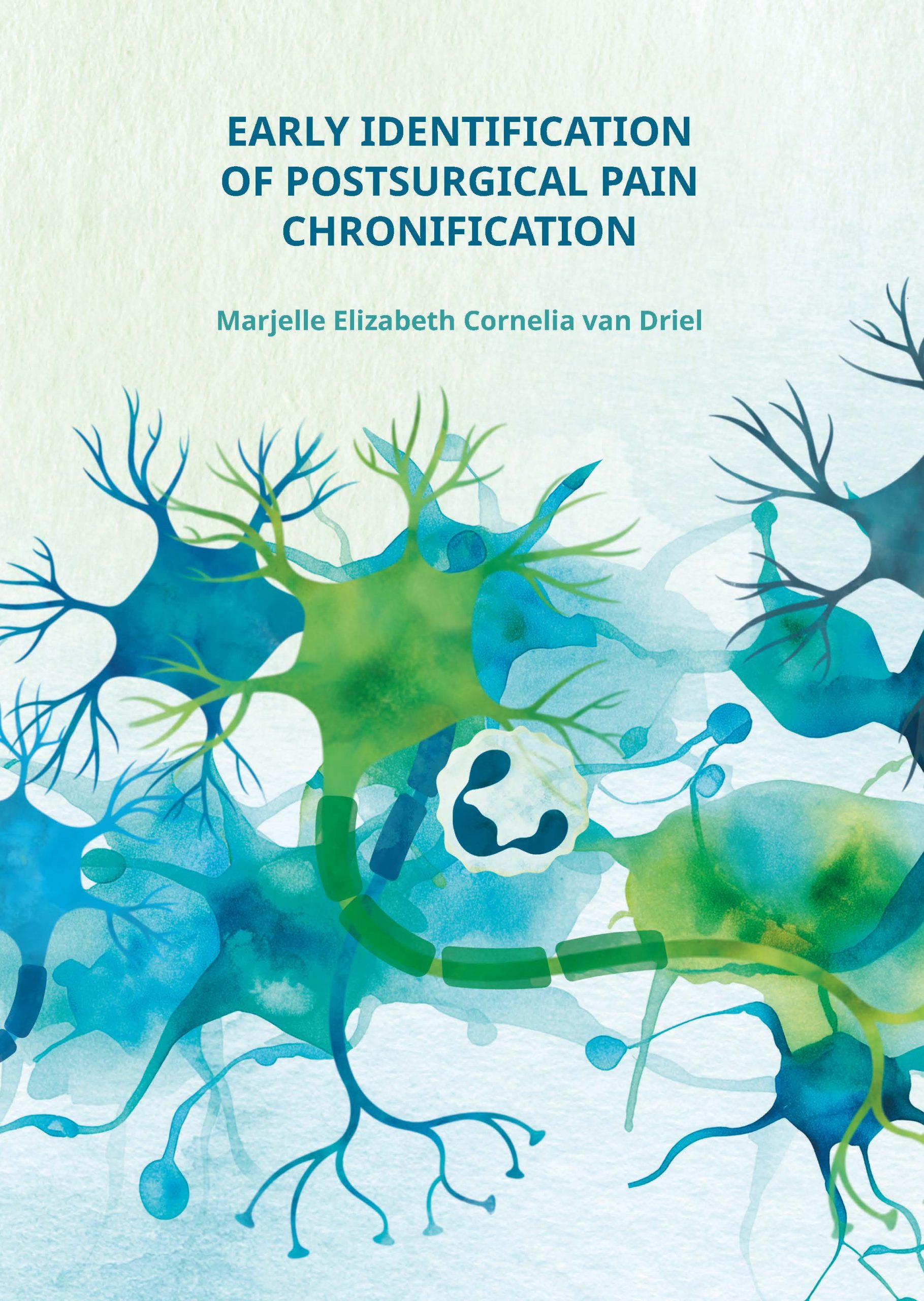
Research at UMC Utrecht by PhD candidate Marjelle van Driel, MD suggests that there may be a critical time frame of two-to four-weeks after surgery that is predictive for the emergence of chronic pain mechanisms. This finding may offer an important window for an early detection and timely intervention to prevent the onset or progression of chronic postsurgical pain.
Pain after surgery is usually temporary and improves as healing occurs. However, in some cases it persists and develops into chronic postsurgical pain (CPSP), affecting recovery, quality of life and contributing to opioid overuse. CPSP is a potentially debilitating complication of surgery with prevalences ranging from 5 to 85 percent. Increasing evidence suggests that the pathophysiology of CPSP involves an intricate interaction between the immune system and sensory neurons. Surgery-induced tissue damage triggers the release of pro-inflammatory mediators that directly act on sensory neurons and promote the recruitment of circulating immune cells to the site of injury.
With increasing demand for surgery in the aging population, understanding how pain after surgery becomes chronic is vital. The PhD thesis by Marjelle van Driel, MD of the Chronification of Pain research group (Department of Anesthesiology and Pain Medicine, UMC Utrecht) investigates how short-term postsurgical pain may turn into long-lasting CPSP, focusing on early detection and the sensory and immunological mechanisms that are involved.
Predicting chronic pain
Marjelle and her colleagues developed two prediction models to identify vulnerability to CPSP. Patients at risk for CPSP could best be identified two weeks after surgery. Characteristics of patients with CPSP were: (1) a high pain intensity, (2) painful cold sensations, (3) use of opioids prior to surgery, and (4) surgery involving bones. The link between painful cold sensations and CPSP suggests changes in central nervous system pain processing, possibly triggered by the body’s immune response to tissue injury.
The SCIP-Pain study, an ongoing prospective observational cohort study that will involve 150 adult patients undergoing elective lower extremity orthopedic surgery, will examine these mechanisms in leg surgery patients by assessing pain intensity via questionnaires, pain sensitivity with Quantitative Sensory Testing (QST), and immune changes via blood analysis. Early results reveal that thermal sensitivity during QST does not match the patient’s reports of painful cold sensations and that QST procedures can be simplified.
“Findings in my PhD thesis points to a critical two-to four-week period after surgery when chronic pain mechanisms emerge, offering a potential window for early detection and timely intervention to prevent the onset or progression of chronic pain that emerges after surgery”.
Role of the immune system
Neutrophils (a type of white blood cells) are among the first responders to inflammation and surgery-induced tissue injury and are thought to reflect the extent of tissue damage and the subsequent immune response that may predispose patients to chronic pain after surgery.
Preliminary immune data from 71 patients included in an analysis of the SCIP-Pain study indicated that the 16 patients who developed CPSP (22.5 percent) had on average fewer neutrophils in the period of two to four weeks after surgery as compared to those not developing CPSP. This finding suggests an impaired ability in these patients to initiate or appropriately regulate the neutrophil response that is crucial for effective tissue repair following surgery.
Critical window
The results otained in this PhD project represent an initial step toward understanding the immune response to surgery-induced tissue injury which is hypothesized to contribute to the development of CPSP. Marjelle van Driel concludes: “Findings in my PhD thesis points to a critical two-to four-week period after surgery when chronic pain mechanisms emerge, offering a potential window for early detection and timely intervention to prevent the onset or progression of chronic pain that emerges after surgery”.
PhD defense
Marjelle van Driel, MD (1995, Utrecht) defended her PhD thesis on November 26, 2025 at Utrecht University. The title of the thesis was “Early identification of postsurgical pain chronification”. Supervisor was Prof. Frank Huygen, MD PhD en co-supervisor was Mienke Rijsdijk, MD PhD (both Department of Anesthesiology and Pain Medicine, UMC Utrecht). Marjelle works as a resident in anesthesiology at Meander Medical Centre in Amersfoort.
Previous articles on this subject
July 22, 2024
Unravelling chronic pain: the role of the immune system
June 29, 2022
Early warning score for chronic pain after surgery helps with prevention