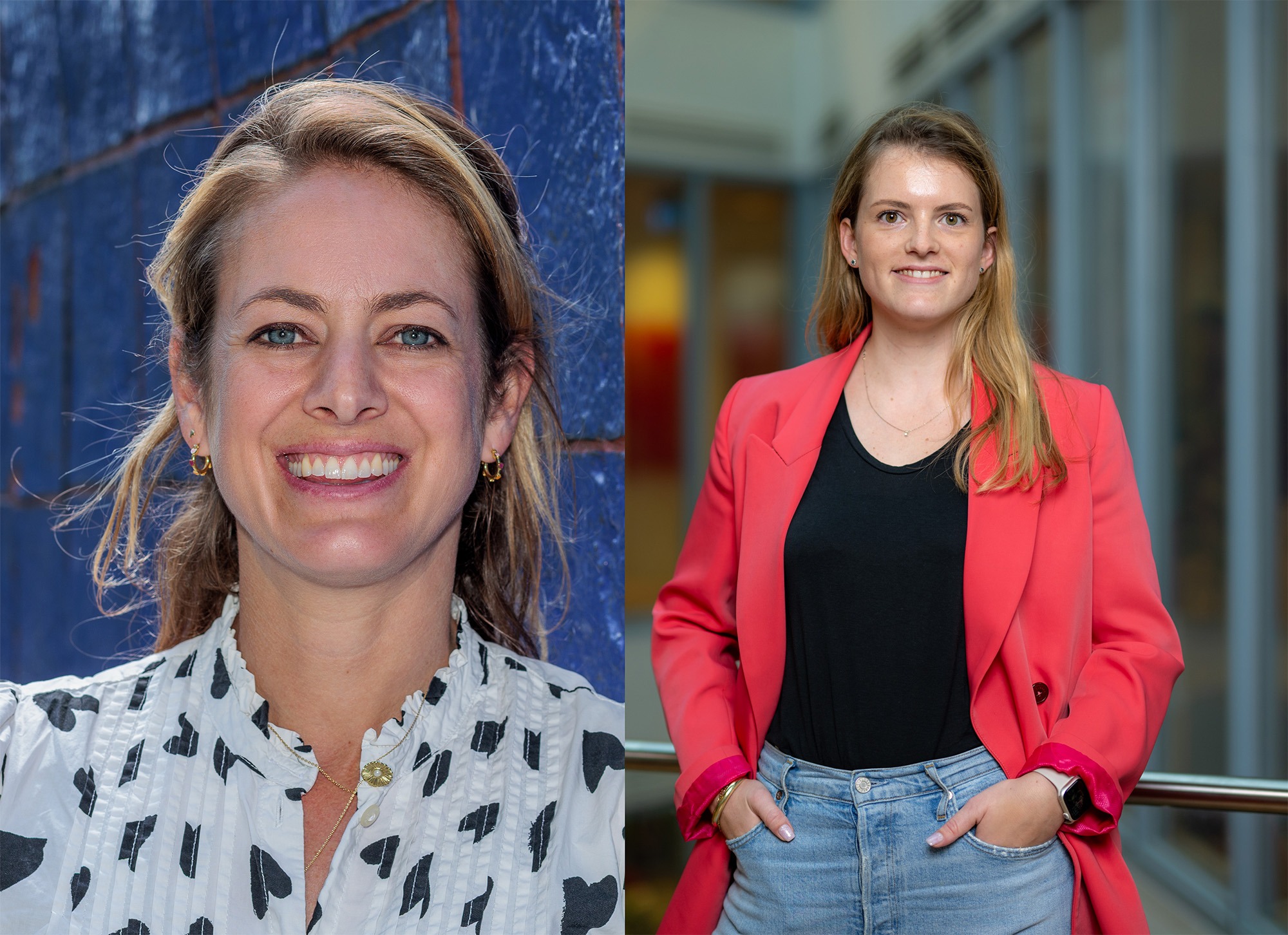
Researchers Joëlle Elias from UMC Utrecht and Jessie van Wezenbeek from Amsterdam UMC have received a Dekker Grant from the Dutch Heart Foundation. This is a personal research grant awarded annually to talented scientists. With this €672,000 grant, they will investigate over the next three years how right heart failure develops and the role inflammation plays in it.
Up to four out of ten people who receive a heart assist device develop right heart failure. Heart failure cardiologist Joëlle Elias and biomedical researcher Jessie van Wezenbeek aim to prevent this. They are developing an accurate risk model and testing smart anti-inflammatory treatments so that doctors can intervene more quickly with the most vulnerable patients.
In the Netherlands, 246,000 people suffer from heart failure. Their hearts are unable to pump blood efficiently. A small portion of these individuals have such severe heart failure that a heart transplant or Left Ventricular Assist Device (LVAD) are their only remaining options. A LVAD is a mechanical pump that is placed during surgery to help the left ventricle pump enough blood throughout the body.
Although people can live longer with a heart assist device, a major problem arises in three to four out of ten patients. The right ventricle suddenly has to process much more blood, becomes overloaded, and may begin to fail. This leads to fluid accumulation, liver and kidney problems, longer ICU stays, and a greater risk of death.
Doctors still find it difficult to identify who is at risk early on. Important indicators, such as inflammatory substances in the blood and subtle changes in heart function, are not routinely measured. Interestingly, women receive a heart assist device less often but develop right heart failure more frequently. The reason for this is still unknown.
Researchers Elias and Van Wezenbeek will investigate how right heart failure develops and the role inflammation plays in the process. They will combine blood tests with measurements of the right ventricle before, during, and after surgery. This way, they aim to develop a risk model that better predicts which patients are vulnerable, separately for men and women.
In addition, they are testing two new treatments that can be directly applied in the clinic. During surgery, a filter will be used to remove inflammatory substances from the blood. After surgery, nerve stimulation through the ear can activate natural anti-inflammatory processes.
With this research, doctors will be able to identify at-risk patients earlier and intervene more quickly with additional care or adjustments to treatment. If the new therapies prove effective, they can be immediately applied to reduce this serious complication. The insights are also valuable for other conditions where the right ventricle is under pressure, such as in heart failure due to a stiff heart muscle or pulmonary hypertension. In this way, the researchers are taking an important step towards safer care for people with severe heart failure.