Using a combination of neonatal in vitro models and antibody engineering, PhD candidate Coco Beudeker (UMC Utrecht) investigated how antigenic targets and modified antibodies influence immune activation in neonates. These findings provide guidance for the development of antibody-based therapies aimed at protecting premature neonates against severe bacterial infections.
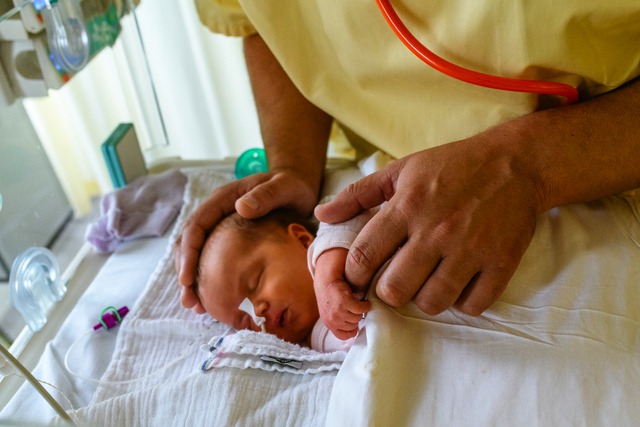
Infants, and especially those born prematurely, are highly vulnerable to sepsis, which involves an invasive – often bacterial – bloodstream infection in neonates, with systemic inflammation and eventually multi-organ failure as a result. It is a leading cause of death in newborns with an incidence of 1,4 million cases and 200,000 deaths worldwide each year. Over the past years, little improvement has been made in the development of preventive treatments for severe bacterial infections in infants. At the same time, rising antimicrobial resistance calls for new ways to prevent and treat such infections safely and effectively.
In her PhD thesis, Coco Beudeker, MD (Department of Medical Microbiology and Department of Pediatric Infectious Diseases & Immunology, UMC Utrecht) aimed to provide insights into neonatal immunodeficiency in the context of antibody-based therapies against bacterial infections. For this, she focused on three key components of antibacterial defense that are deficient in (preterm) infants: antibodies, complement system, and neutrophils.
“Our findings show that antibodies that effectively activate the complement system have the potential to protect against certain severe bacterial infections and sepsis, especially in extremely premature neonates”
Modified antibodies enhance complement activation
Using umbilical cord blood – a non-invasive way to collect neonatal blood, Coco worked with laboratory models that more accurately reflect the neonatal immune system than conventional, widely used cell lines. These age-appropriate in vitro models allowed her to test the potential of new antibody-based therapies. She also studied the effect of modified antibodies with increased complement-activating potential. This modification resulted in a higher immune-activation in an experimental neonatal model as compared to conventional therapies like pooled immunoglobulins from healthy donors. She showed that a lack of complement activation might be an explanation of failed trials with monoclonal antibodies in the past.
Additionally, she showed that differences in complement profiles in neonates may contribute to their vulnerability for infections with Gram-negative bacteria and that antibody therapy alone may not be sufficient to prevent sepsis. Finally, Coco Beudeker and colleagues showed in laboratory experiments that neonatal neutrophils are capable of performing efficient phagocytosis, but only under specific plasma conditions or when specific antibodies were used.
“The results from my thesis underline the need to consider the deficiencies of the immune system of the newborn when developing antibody-based therapies”, said Coco Beudeker. “Overall, our findings show that antibodies that effectively activate the complement system have the potential to protect against certain severe bacterial infections and sepsis, especially in extremely premature neonates.”
PhD defense
Coco Beudeker, MD (1992, Haarlem) defended her PhD thesis on December 4, 2025 at Utrecht University. The title of her thesis was “Potential of monoclonal antibodies against neonatal sepsis: lessons from age-specific in vitro models.” Supervisors were Prof. Suzan Rooijakkers, PhD (Department of Medical Microbiology, UMC Utrecht) and Prof. Louis Bont, MD PhD (Department of Pediatrics, UMC Utrecht). Co-supervisor was Michiel van der Flier, MD PhD (Department of Pediatrics, UMC Utrecht).
In 2025, Coco was accepted into the training program to become a pediatrician at Radboudumc in Nijmegen.
Previous articles on this subject
October 14, 2025
Conversion of IgG antibodies to IgM broadens antibacterial activity
April 23, 2025
IgM-based antibodies involved in human immunity against bacteria
September 24, 2024
Researchers identify antibodies against Klebsiella pneumoniae