Children with juvenile dermatomyositis can experience a flare of the disease even when symptoms appear under control. Research by UMC Utrecht PhD candidate Saskia Veldkamp shows that blood biomarkers Galectin-9 and CXCL10 can reveal hidden inflammation and may predict flares months in advance. Her findings could help doctors to tailor treatment and reduce disease-induced damage to muscles and skin as well as medication side effects.
Juvenile dermatomyositis (JDM) is a rare systemic autoimmune disease that causes inflammation in the muscles and the skin. In the Netherlands, JDM is newly diagnosed in 8-10 children each year and patients typically develop weakness, rashes and fatigue. In addition, the lungs, heart or intestines can also be affected. Standard treatment combines high-dose corticosteroids and methotrexate, often for years. Although survival has greatly improved over the years, physicians cannot reliably predict which patients can safely reduce medication or who needs more intensive treatment.
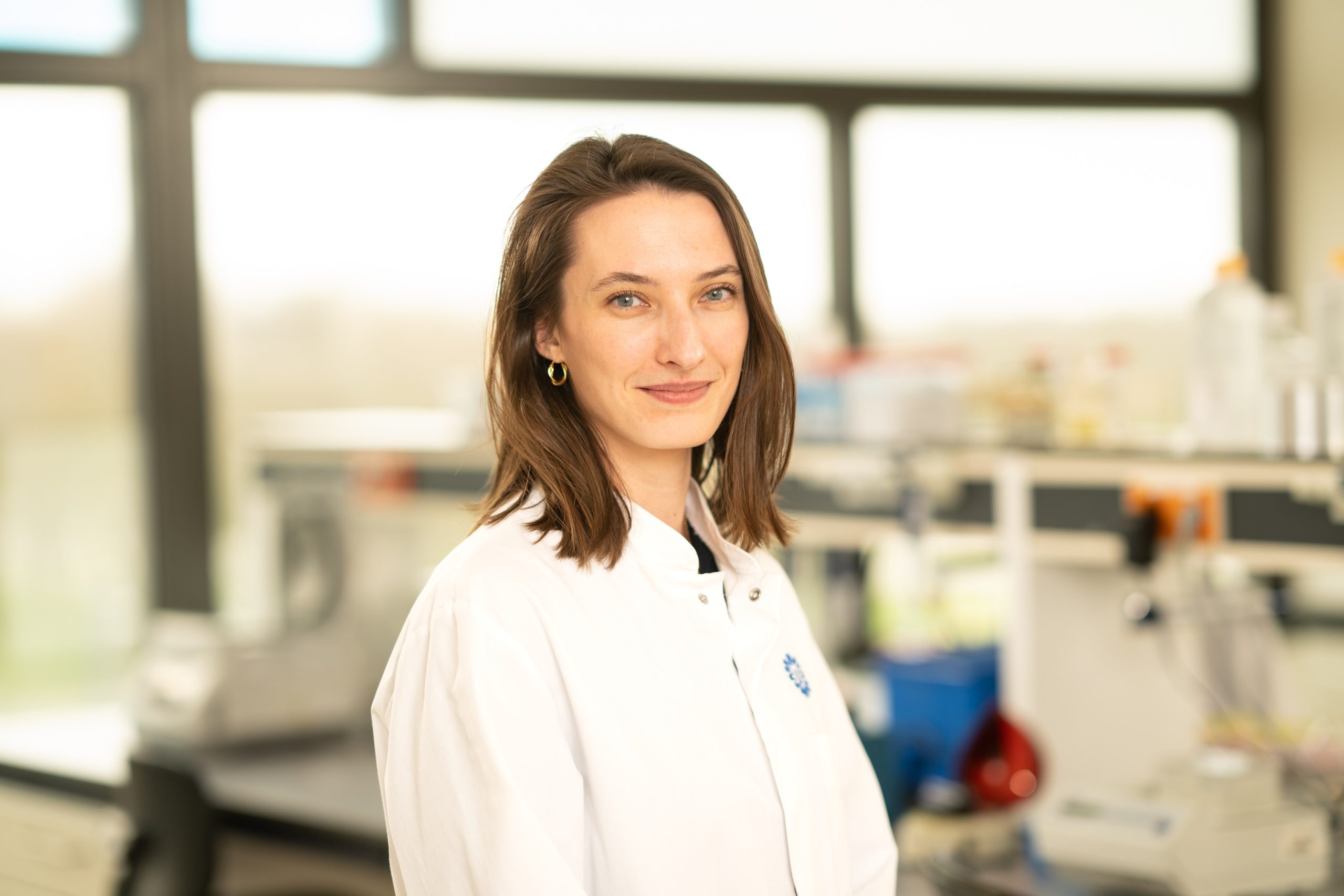
Saskia Veldkamp
In her PhD thesis, Saskia Veldkamp, MD (Center for Translational Immunology, UMC Utrecht) took a translational approach to address these challenges, integrating insights in interferon signaling (signaling proteins that can drive inflammation) with the discovery and validation of biomarkers that can be applied in clinical practice.
In one of her studies, Veldkamp and colleagues followed 83 children under 18 years of age with JDM from six Dutch academic hospitals. In this study, two interferon-related blood proteins, Galectin-9 and CXCL10, proved more sensitive at diagnosis than creatine kinase (CK), the muscle enzyme routinely measured in clinical practice. Galectin-9 was elevated in 98 percent of patients and CXCL10 in 93 percent, compared with only 73 percent for CK. In addition, whole-body MRI also appeared to be able to detect muscle inflammation reliably. Furthermore, about half of the patients needed more intensive treatment because the disease responded insufficiently or returned. Side effects and permanent tissue damage were also common.
Disease flares were further investigated in an international study of 141 children in the Netherlands, France, Singapore and Canada. Using 756 blood samples, the researchers found that Galectin-9 and CXCL10 began rising about a year before a disease flare became apparent. When both markers were high, the risk of a flare was 12 times greater. The markers did not, however, predict flares affecting only the skin.
Veldkamp also studied Siglec-1, a biomarker on immune cells that reflects the activity of interferons. High Siglec-1 levels at diagnosis identified children that were more likely to need more intensive treatment within three months. In adults with inflammatory muscle diseases, levels fell after successful therapy, suggesting that this marker may also help to monitor drug response.
Laboratory experiments by Saskia Veldkamp and co-workers indicated that interferon-β plays a prominent role in JDM. JAK inhibitors (medicines that block interferon signaling) suppressed this inflammatory response in a dose-dependent manner. Although this does not yet prove that JAK-inhibitors is efficacious in children with JDM, these findings offer a basis for selecting and testing targeted treatments.
Saskia Veldkamp concludes: “However, before these biomarkers can guide routine care, prospective studies must establish reliable thresholds and show that biomarker-guided decisions improve outcomes. If successful, healthcare providers could intervene prior to the emergence of serious flares and reduce medication sooner in children at low risk. That could result in a lower incidence of long-term damage and fewer steroid-related side effects for children and their families.
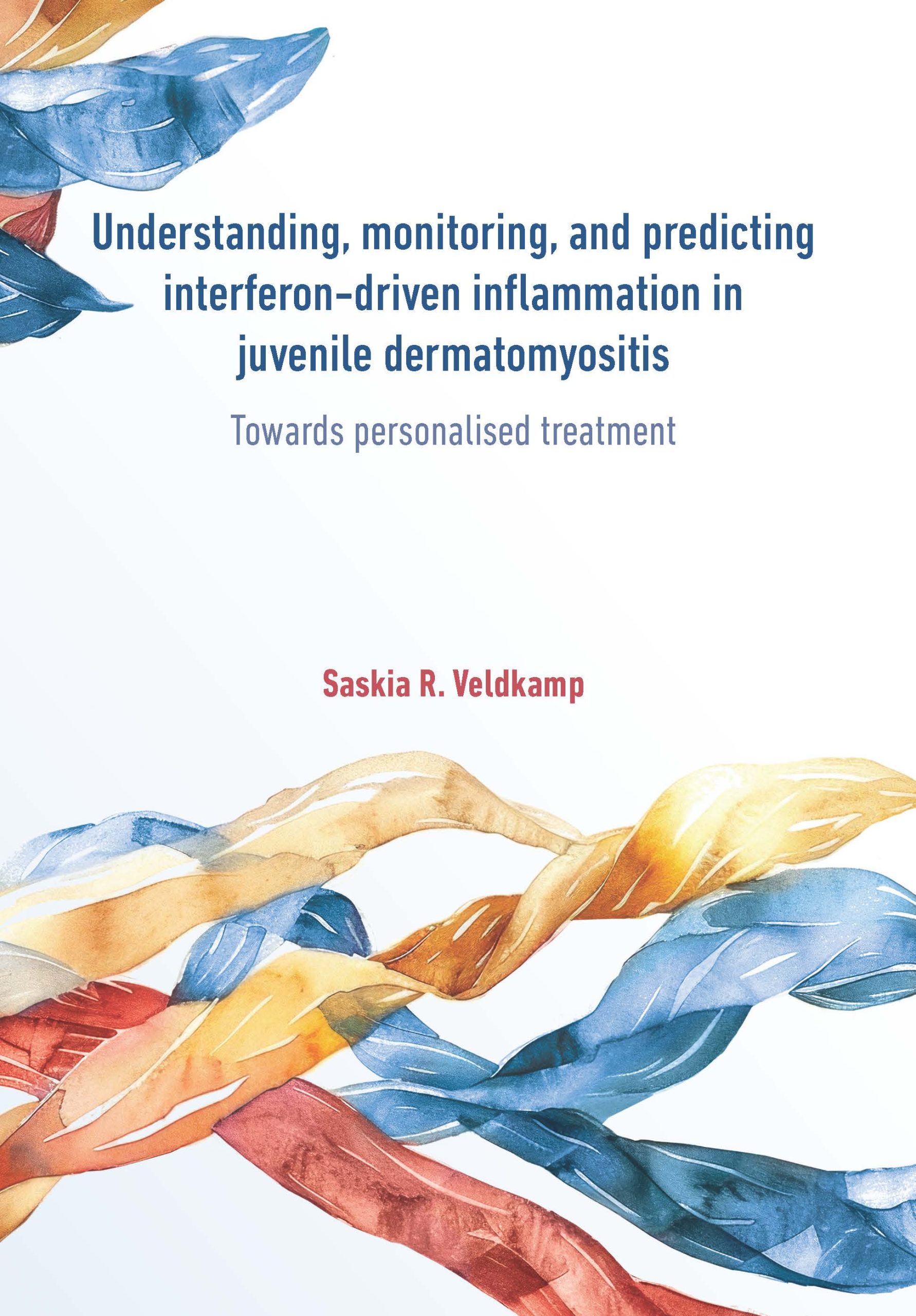
Saskia Veldkamp, MD (1994, Den Haag) defended her PhD thesis on September 23 2026 at Utrecht University. The title of her thesis “Understanding, monitoring, and predicting interferon-driven inflammation in juvenile dermatomyositis – Towards personalised treatment)”. Supervisors were Prof. Femke van Wijk, PhD (Center for Translational Immunology, UMC Utrecht) en Prof. Annet van Royen-Kerkhof, MD PhD (Department of Pediatric immunology and Rheumatology, UMC Utrecht). Co-promotor was Marc Jansen, MD PhD (Department of Pediatric immunology and Rheumatology, UMC Utrecht). In July 2026, Saskia started her residency in pediatrics at Gelderse Vallei Hospital in Ede.