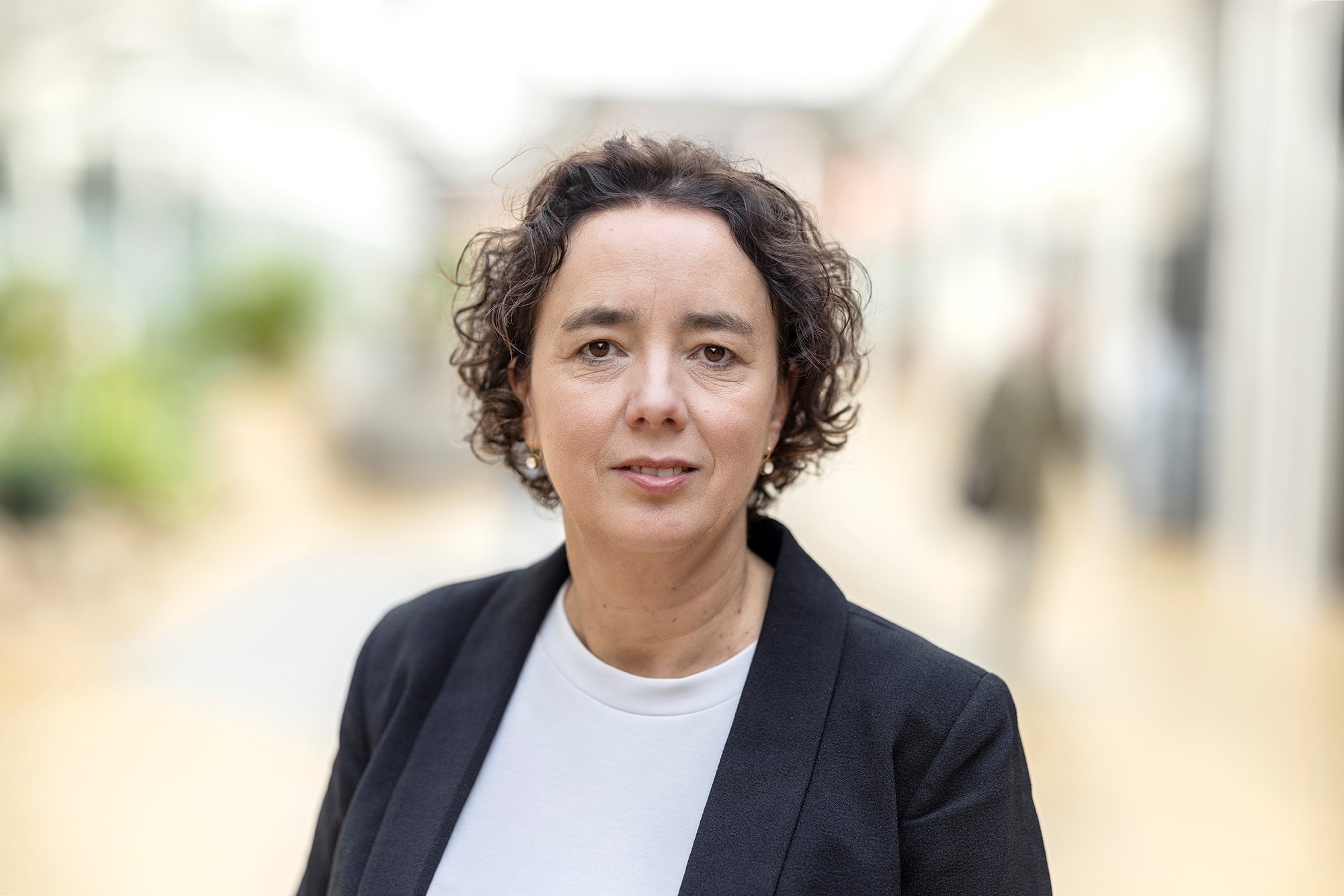
Professor Ynte Ruigrok has received an ICRPA grant from the Dutch Heart Foundation to study brain aneurysms. With this research, she aims to better understand why an aneurysm ruptures and how we can improve prediction and treatment in the future.
Around three percent of adults in the Netherlands have a brain aneurysm. This is a weak spot in an artery in the brain, where the vessel wall is thinner and bulges outward.
When an aneurysm ruptures, it causes bleeding between the brain and the skull: a subarachnoid hemorrhage. This is life-threatening and often leads to permanent damage. To prevent rupture, patients sometimes receive preventive treatment. This is not always done, as there is currently no safe non-surgical treatment. As a result, the risks of intervention can sometimes outweigh the benefits.
Professor Ynte Ruigrok
Physicians are not yet able to accurately predict the risk of bleeding. “We still do not understand why some aneurysms rupture and others do not,” says Ynte Ruigrok, professor of ‘Genetics of Cerebrovascular Diseases’. “That is why we often monitor patients over a longer period. We usually only intervene once an aneurysm starts to grow.”
Ruigrok therefore aims to understand why an aneurysm does or does not rupture. “Previous animal studies suggest that certain proteins produced by platelets are involved in the formation and rupture of aneurysms,” she explains.
“In particular, we see that the protein Platelet Factor 4 (PF4) plays a key role. This protein is also involved in the development of inflammation, a process that affects aneurysms. We want to understand why that is.”
Together with colleagues from Germany and France, Ruigrok aims to map the role of PF4 in aneurysms using cell and animal models. In addition, they will analyze the genetic material and proteins of people with an aneurysm. “We then examine how PF4 is involved in the development of an aneurysm or in bleeding from such an aneurysm,” Ruigrok explains.
With this research, Ruigrok hopes to better predict which aneurysms carry a high risk of rupture. “If PF4 plays an important role, it could serve as a biomarker to improve risk prediction. This would allow us to identify and treat high-risk patients at an earlier stage.”
The research may also lead to new treatment options. “Depending on the role of PF4, we may be able to inhibit or stimulate this protein with medication. This could help us treat aneurysms more safely in the future,” Ruigrok concludes.
For this research, UMC Utrecht collaborates with international partners. The principal applicant is Dr. Yacine Boulaftali from Université Paris Cité and Université Sorbonne Paris Nord. Dr. Remco Megens and Dr. Johan Duchêne from the Institute for Cardiovascular Prevention at the University Hospital Munich are also involved.
The International Cardiovascular Research Partnership Awards (ICRPA) support innovative research aimed at preventing, detecting, and improving the treatment of cardiovascular diseases. This funding stimulates international collaboration between research groups. The program is a partnership between the Dutch Heart Foundation and international partners, such as the British Heart Foundation, the Deutsches Zentrum für Herz-Kreislauf-Forschung, and research institutes in France and Spain.